
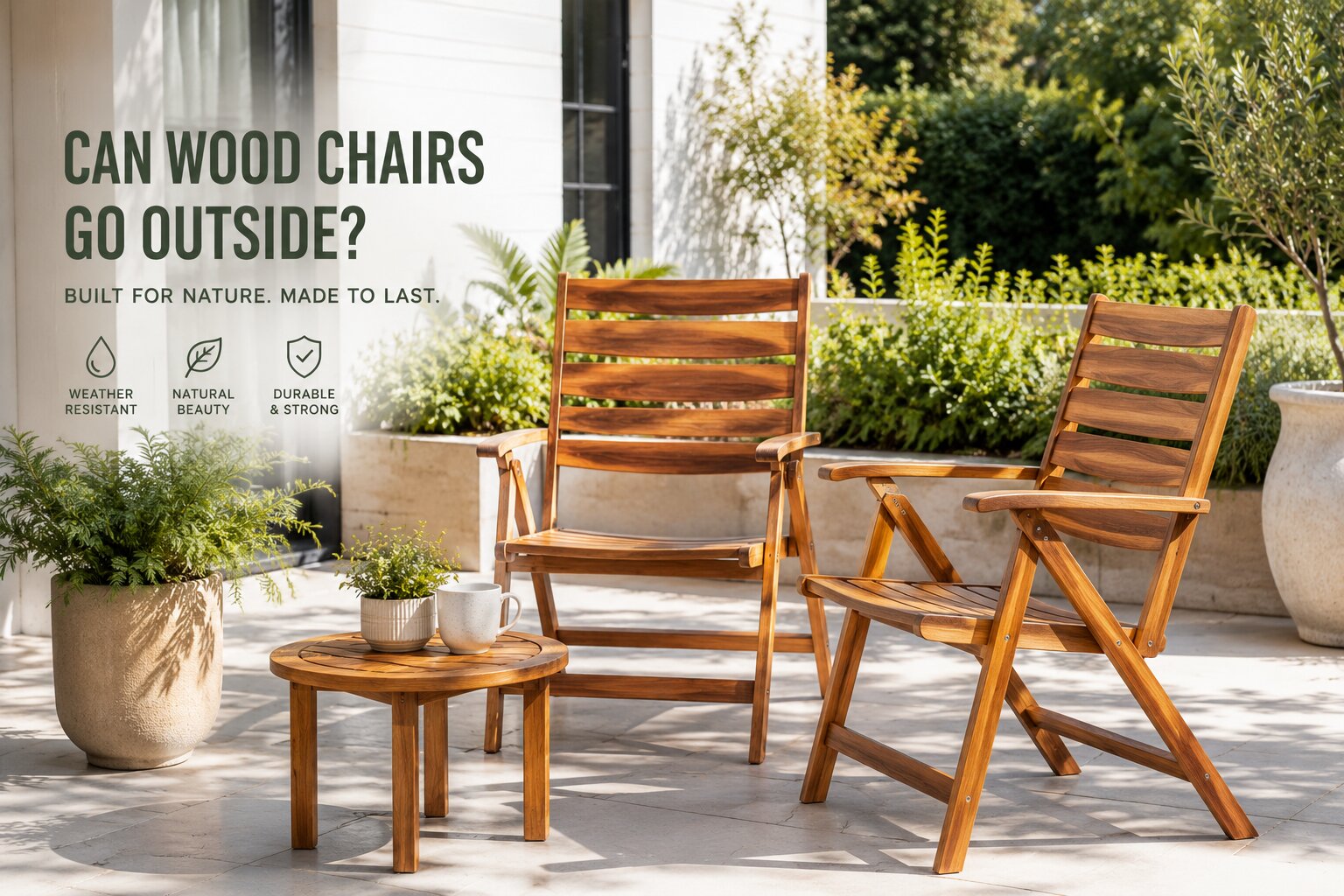
Can wood chairs go outside? Yes, wood chairs can be used outdoors, but only when the material, finish, placement, and care routine are suitable for outdoor conditions. A solid hardwood chair with a weather-resistant oil or exterior sealant can handle normal patio use much better than an untreated indoor dining chair.
The main risks are not just rain, but repeated moisture, direct sun, temperature changes, and poor airflow. If you want a wood chair to stay attractive and structurally sound outside, you need to understand what kind of wood it is, where it will sit, and how often it will be exposed to wet weather. With the right setup, wooden seating can work beautifully on a patio, garden, porch, or balcony. For the broader material question, see is acacia wood good for outdoor furniture and our acacia wood outdoor furniture hub.
Can Wood Chairs Go Outside Safely?
Wood chairs can go outside safely when they are made from outdoor-suitable wood and protected with the right finish. Hardwoods such as acacia, teak, eucalyptus, and oak generally perform better outdoors than soft, untreated indoor woods. Acacia is especially common for outdoor garden chairs because it is dense, durable, and naturally more resistant to daily wear than many lighter woods.
The safest outdoor use depends on three things: the chair material, the protective coating, and the exposure level. A sealed wood chair under a covered patio will last much longer than an unfinished chair sitting directly in an open garden. If the chair was sold as indoor furniture, it may not have glue, joints, or finish designed for rain and sun. In that case, outdoor use should be limited, temporary, or supported with extra sealing.
Can wood chairs go outside?
Can Wooden Chairs Get Wet?
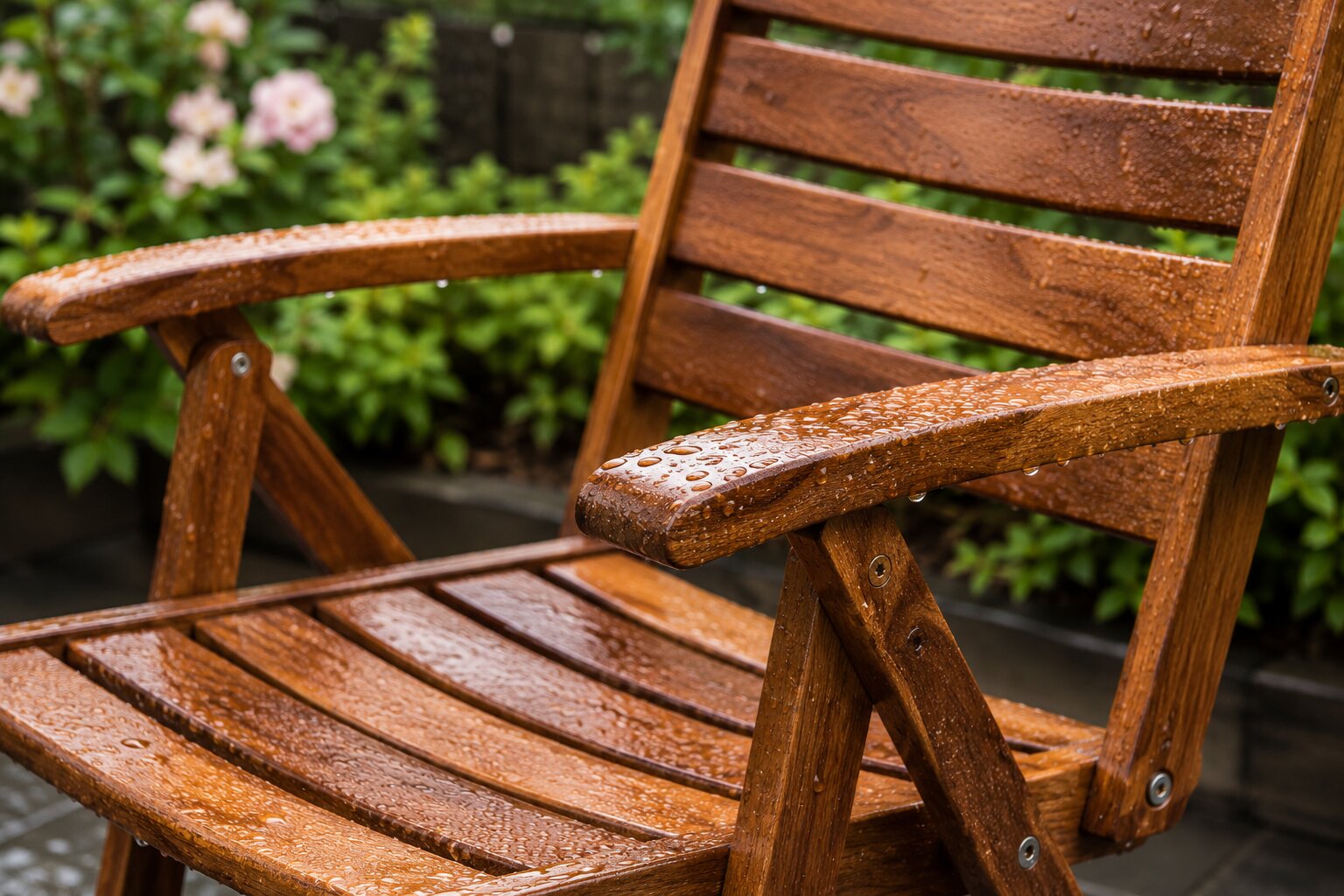
Can wooden chairs get wet? A well-protected wooden chair can handle occasional moisture, but it should not stay wet for long periods. Rainwater can enter small cracks, joints, screw holes, and unfinished edges. Over time, this causes swelling, surface roughness, discoloration, and loose joints. The problem is worse when water sits on flat surfaces or collects around the legs.
Short exposure is usually manageable if the chair dries quickly. Long exposure is where damage begins. If you use garden chairs outside, check whether water beads on the surface or soaks into the wood. Beading usually means the finish is still working. Dark patches, raised grain, or a dull dry surface may mean the protection has worn down.
Common moisture risks include:
- Swelling: Wood expands when it absorbs too much water.
- Cracking: Wet-dry cycles can make the surface split.
- Mold or mildew: Poor airflow keeps moisture trapped.
- Loose joints: Water can weaken glue and hardware connections.
- Color change: Rain and UV exposure can turn wood grey over time.
Can I Leave Wooden Chairs Outside All Year?
Can I leave wooden chairs outside all year? In mild climates, yes, if the chairs are outdoor-rated, sealed, cleaned, and covered during heavy rain. In harsh climates, all-year exposure is risky. Constant sun, storm rain, snow, freezing temperatures, and high humidity all shorten the life of wood furniture. The same logic applies to can acacia wood chairs stay outside year-round: only outdoor-rated acacia chairs with intact finish, drainage, airflow and winter cover/storage should stay out; otherwise store them.
Placement matters as much as the chair itself. Outdoor chairs under a roof, pergola, covered porch, or balcony overhang are easier to maintain than chairs left fully exposed on grass or stone. A chair placed on wet soil or an area with poor drainage will absorb moisture through the legs. If the chair is on a balcony, make sure water can drain away after rain.
A practical year-round checklist:
- Use breathable furniture covers during rain or snow.
- Keep chair legs off wet soil or standing water.
- Clean the surface before dirt traps moisture.
- Re-oil or reseal the wood before the finish looks dry.
- Store cushions indoors when not in use.
- Move chairs into storage during extreme storms or long freezing periods.
What Happens to a Wood Chair in Rain?
A wood chair in rain is not automatically ruined, but repeated rain exposure slowly breaks down the finish. The first stage is usually cosmetic: the surface becomes dull, rough, or slightly grey. If the chair continues to sit wet, water can move deeper into the grain and joints. That is when structural issues become more likely.
Rain damage is often a combination of water, sunlight, and temperature changes. Rain softens the surface. Sun dries it quickly. The repeated expansion and contraction can create tiny cracks. Once cracks appear, the next rainfall enters more easily. This cycle is why outdoor wood furniture needs regular maintenance, even when the wood itself is durable.
Signs your chair needs attention include:
- The surface feels rough instead of smooth.
- The color has faded unevenly.
- Black or green spots appear around joints.
- The finish peels, flakes, or turns cloudy.
- The chair wobbles or feels loose when used.
You may also like
- Solid Acacia Wood Dining Chairs: 7 Reasons to Choose Them
- Acacia vs Composite Deck Tiles: Which Outdoor Floor Wins?
- Wood Color Interior Design: Scandinavian, Minimalist and Vintage Rooms
- Bar Stool vs Counter Stool Height: How to Choose the Right Stool
- Best Deck Tiles for Balcony Spaces: 2026 Guide
- How to Install Deck Tiles: Step-by-Step Guide
Can Wooden Rocking Chairs Stay Outside?
Can wooden rocking chairs stay outside? They can, but they need more protection than simple fixed chairs. A rocking chair has moving stress points, curved runners, and more joint pressure during use. If water sits on the runners or enters the lower joints, the chair can become unstable faster than a standard patio chair.
The best place for a wooden rocking chair is a covered porch, shaded balcony, or sheltered patio. Avoid leaving it directly on wet ground. If it must stay outside, use a breathable cover and check the joints, screws, and runners often. Reapply oil or sealant before the wood becomes dry or faded. A rocking wood chair can be a comfortable outdoor piece, but it should not be treated like all-weather plastic or metal seating.
Can I Keep a Wooden Chair on a Balcony in Winter?
Can I keep a wooden chair in balcony in winter? Yes, but only with protection. Winter is hard on wood because moisture can freeze, expand, thaw, and repeat. Even a small amount of water inside cracks or joints can cause damage over time. Balconies can also collect wind-driven rain or snow, especially if they are not fully covered.
If you keep a wooden chair on a balcony in winter, clean it first, let it dry completely, and apply a suitable exterior oil or sealer before cold weather arrives. Use a breathable cover rather than a fully airtight plastic wrap, because trapped condensation can encourage mold. Raise the chair slightly if the balcony floor gets wet. Remove cushions and fabric parts, and store them indoors. If the winter is severe or the balcony is exposed, indoor storage is the better option.
How to Protect Wood Chairs Outside
The best way to protect wood chairs outside is to reduce the amount of time they stay wet and renew the protective finish before the wood becomes vulnerable. Outdoor wood does not need to be perfect to last, but it does need consistent care. A simple seasonal routine can make a major difference. Can wood chairs go outside for daily use? They can, as long as this kind of protection becomes part of normal maintenance.
- Choose the right wood: Acacia, teak, eucalyptus, and other dense hardwoods are better suited to outdoor use.
- Use exterior protection: Apply outdoor oil, sealant, or finish based on the manufacturer’s guidance.
- Cover when needed: Use breathable covers during heavy rain, snow, or long periods without use.
- Avoid standing water: Tilt chairs after rain if water collects on the seat.
- Clean gently: Use mild soap and water instead of harsh chemicals.
- Inspect the joints: Tighten hardware and check for movement before damage spreads.
- Refresh the finish: Re-oil or reseal when water no longer beads on the surface.
If you are buying new wooden seating, look for outdoor garden chairs designed specifically for exterior use. That usually means stronger finishes, more suitable hardware, and better resistance to everyday patio conditions. For choosing comfort and size, see how to choose outdoor chairs.