
Acacia wood garden furniture works best when every piece has a clear job. A useful outdoor space does not need to be filled with matching furniture from edge to edge. It needs the right seating, a surface placed at the right height, and enough open room to move comfortably.
This guide breaks an outdoor setup into six practical product types. The first two—seating and a table—form the core. Lounge furniture, deck tiles and planters become valuable only when they solve a specific need. Start with how you expect to use the space, then build the smallest complete arrangement that supports that activity.
Acacia Wood Garden Furniture: What Is Actually Essential?
For most patios, gardens and balconies, the minimum functional setup is simple: a place to sit and a surface that suits the activity. Everything else should improve comfort, circulation, privacy or visual balance.
| Product type | Best reason to add it | Priority |
|---|---|---|
| Outdoor chairs | Flexible seating for dining, conversation or small spaces | Core |
| Garden table | Dining, serving, drinks or everyday outdoor tasks | Core when a surface is needed |
| Outdoor sofa or conversation set | Comfortable lounging and group conversation | Core for a lounge-focused space |
| Outdoor decking tiles | Improving an appropriate existing floor surface | Optional |
| Wooden flower box | Creating a planted edge, focal point or softer boundary | Optional |
| Plant stand | Adding vertical greenery without using much floor area | Optional |
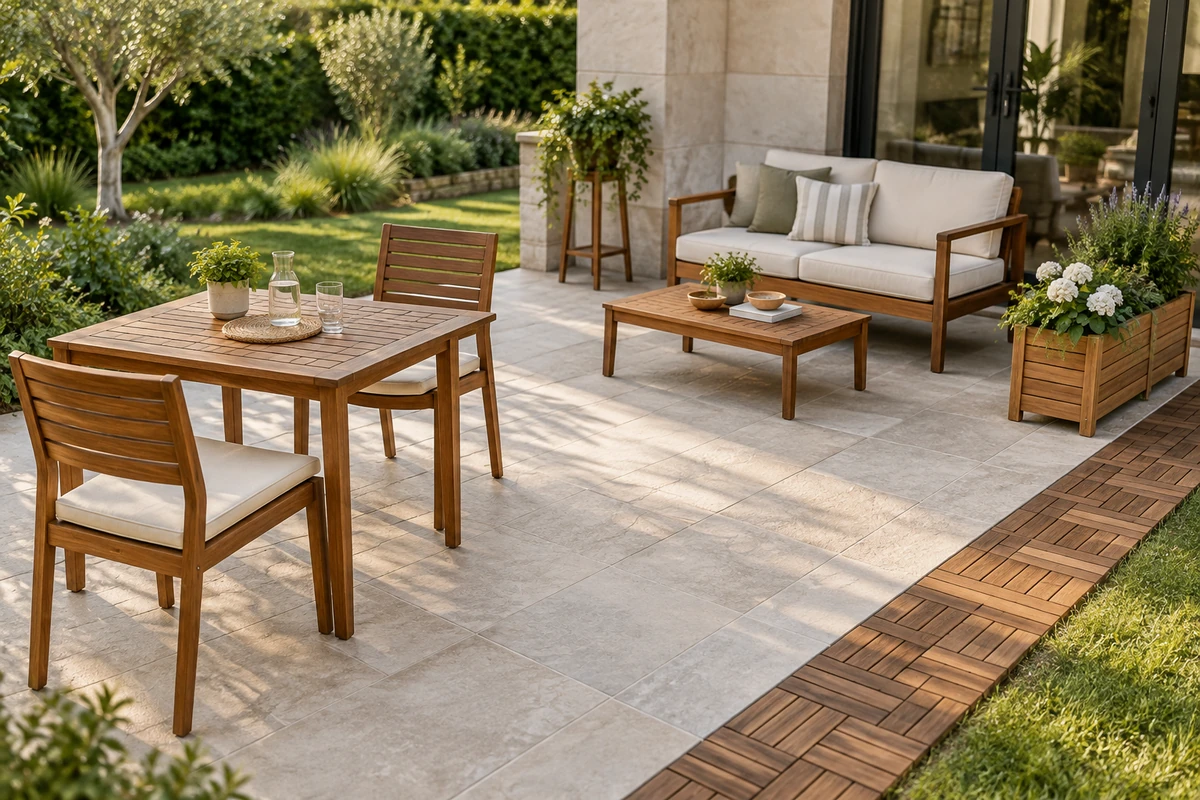
A practical outdoor layout starts with dining and lounge zones while preserving clear walking space. AI-generated illustration.
1. Choose Outdoor Chairs Around the Activity
Outdoor chairs are the most adaptable starting point. Dining chairs support meals at a table, lounge chairs encourage longer periods of relaxation, and folding designs can free up floor space when they are not required. The important decision is not simply how many chairs fit across the patio; it is what those chairs need to do.
For dining, compare seat height and arm height with the actual table. Check that each chair can approach the table without its arms meeting the apron or its legs colliding with the table base. For a balcony, consider how the chair moves and where it will be stored. A folding chair saves space only when there is a practical place to put it.
If comfort is the priority, assess the back angle, seat depth and cushion care rather than choosing from appearance alone. Our guide on how to choose outdoor chairs covers comfort, size and material in greater detail. Always compare those principles with the dimensions and specifications shown on the individual product page.
2. Add the Right Garden Table, Not Simply the Largest One
A garden table gives the seating arrangement a purpose. Dining tables need room for place settings and chair movement. Coffee and side tables sit lower and work beside lounge seating. A compact bistro table may be enough for two people having drinks, but it may not provide the surface expected for full meals and shared dishes.
Before choosing a table, mark its footprint on the floor and place the intended chairs around it. Include doors, steps, railings, planters and the route people use to reach the garden. The outdoor table size guide provides estimated planning starting points for two, four, six or eight seats. Product specifications and the complete real-world layout should make the final decision.
A small space often benefits from one correctly scaled table rather than several separate surfaces. In a lounge area, however, a central coffee table plus one accessible side table may serve people more naturally than a dining-height table.
3. Use an Outdoor Sofa for Lounging, Not as a Default Purchase
An outdoor sofa or conversation set makes sense when relaxation and social time are the primary goals. It creates a defined lounge zone and can seat several people without scattering individual chairs throughout the space. The tradeoff is a larger fixed footprint.
Measure the sofa frame, not only the cushion area. Then allow space to approach the seating and reach a coffee or side table. On compact patios, a sofa should not block the most useful route or force every other piece against a wall. Two lounge chairs may provide a more flexible alternative when the layout changes frequently.
Cushions also introduce a storage and care decision. Check the product information for removable covers, cushion construction and any care instructions. Do not assume that every fabric or filling can remain uncovered in all weather.
Outdoor Furniture Essentials
-
New

-
New
-
New
-
Out of StockSold Out
4. Consider Outdoor Decking Tiles as a Surface Upgrade
Outdoor decking tiles are not furniture, but they can change how a balcony or patio feels underfoot. They are most useful when the existing surface is suitable for the tile system and the goal is to create a warmer, more finished floor without treating it as a structural deck replacement.
Measure the usable floor area and account for cuts, borders and obstacles before estimating quantity. Check drainage, clearance at doors and the installation requirements of the selected product. A flat-looking area can still have slopes or irregular sections that affect the result.
Deck tiles should follow the furniture plan rather than determine it. Establish the dining or lounge footprint first, then decide whether the visible surrounding floor needs improvement. This prevents buying material for areas that will remain hidden or must stay clear.
5. Use a Wooden Flower Box to Shape the Space
A wooden flower box can create a planted edge around a seating area, soften a railing or introduce a focal point. It becomes especially useful when greenery needs to define a zone without adding another piece of seating.
Before buying, check the planter dimensions, drainage approach and the needs of the plants you intend to use. Consider the combined weight after adding soil, water and plants, particularly on a balcony. Select plants according to the actual sun and exposure of the location rather than the appearance of the empty container.
One or two purposeful planters usually provide more structure than many small containers spread across circulation areas. Leave enough room to water and maintain them without moving the main furniture.
6. Add a Plant Stand When Floor Space Is Limited
A plant stand raises greenery into the sightline and helps use vertical space. It can fill a narrow corner, bring smaller pots closer to the light or add variation in height beside a chair or sofa.
Match the pot diameter and expected loaded weight to the stand. Stability matters more than the number of tiers, especially outdoors where the stand may be exposed to wind or uneven flooring. Keep taller arrangements away from routes where they could be bumped.
Plant stands and flower boxes are finishing pieces. Add them after confirming that people can sit, pull out chairs, open doors and move through the space comfortably.
Essential Outdoor Furniture by Space Type
| Space | Start with | Add only if useful |
|---|---|---|
| Small balcony | Two compact chairs and a small table, or a coordinated three-piece set | Folding pieces, one plant stand, or suitable deck tiles |
| Dining patio | Dining chairs and a table sized for everyday use | Serving surface or a flower box outside the chair-clearance zone |
| Lounge patio | Sofa or lounge chairs with a coffee or side table | Planters that define the edge without closing the route |
| Flexible garden area | Movable chairs or a bench with a table suited to the main activity | Additional seating brought out only when needed |
How to Build the Setup in the Right Order
- Measure the usable area. Exclude doors, steps, fixed planters and any path that must stay open.
- Choose one primary activity. Decide whether dining, lounging or flexible seating matters most.
- Select the seating. Use actual product dimensions and the number of everyday users.
- Match the surface. Choose the table type and height around the seating and activity.
- Test circulation. Mark the complete arrangement and move through it as if the seats were occupied.
- Add finishing elements. Consider deck tiles, a flower box or a plant stand only after the functional layout passes the test.
This order keeps an acacia wood garden furniture plan focused. It also reduces the chance of buying decorative pieces first and discovering that the essential seating or table no longer fits comfortably.
Frequently Asked Questions
What outdoor furniture should I buy first?
Start with seating for the people who use the space most often. Add a dining, coffee or side table according to the main activity. Test those pieces as one arrangement before adding planters, extra seating or flooring accessories.
Do I need both outdoor chairs and a sofa?
No. Dining chairs suit table-based activities and flexible layouts, while a sofa suits a lounge-focused space. Choose the type that supports the primary use. Add the other only when the available area and a distinct secondary activity justify it.
What is the best setup for a small balcony?
A practical starting point is two compact chairs with a small table or a coordinated three-piece set. Confirm door clearance and the route through the balcony. Folding furniture may help when there is a convenient storage position.
Are deck tiles essential for a patio?
No. Deck tiles are an optional surface upgrade. Consider them when the existing floor, drainage, door clearance and product installation requirements make the system appropriate. Plan the furniture footprint first.
How do I keep an outdoor space from feeling crowded?
Give every item a job, keep one clear route and avoid buying for the maximum possible number of guests. A smaller everyday setup with occasional extra seating is often more usable than a permanently full patio.
The most successful acacia wood garden furniture arrangement is not the one with the most pieces. It is the one that supports everyday use while leaving enough open space to sit, move and care for the area comfortably. Begin with seating and the right table, then let each additional product earn its place.