
Are wood deck tiles worth it? For many patios, balconies, and other compact outdoor spaces, they can be—especially when you want a warmer-looking floor without building a permanent deck. Interlocking wood tiles can cover a suitable hard surface quickly, individual pieces can be lifted for cleaning or replacement, and the finished floor feels more natural than bare concrete.
They are not maintenance-free, however. Natural wood changes outdoors, requires routine cleaning, and may need periodic oiling if you want to preserve its original color. The value therefore depends on your surface, climate, expectations, and willingness to care for the material. This guide weighs the benefits, drawbacks, cost factors, and lifespan so you can decide whether wood deck tiles make sense for your space.
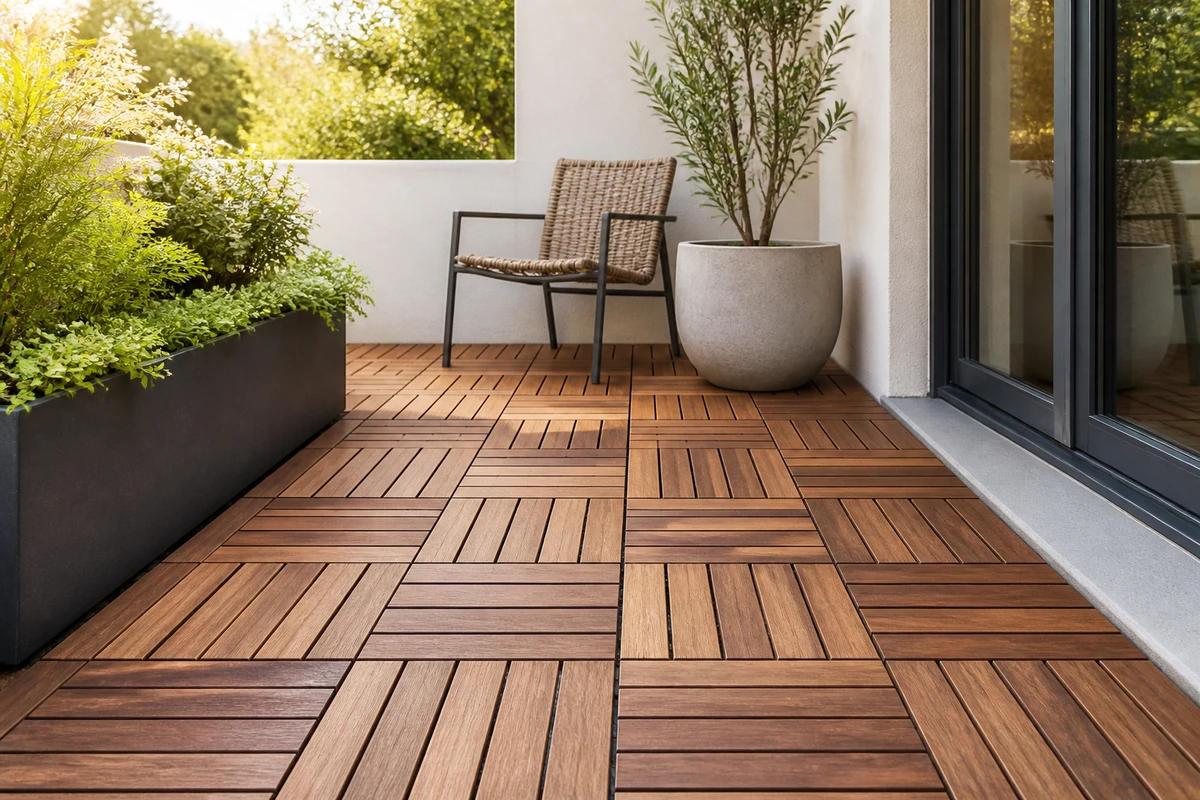
Acacia wood deck tiles create a warm modular floor over a suitable hard patio surface.
Are Wood Deck Tiles Worth It for Your Outdoor Space?
Wood deck tiles are usually worth considering when the existing surface is hard, stable, reasonably level, and able to drain. In those conditions, the interlocking backing creates a modular floor without the framing and permanent fastening associated with a traditional deck. That makes the format particularly useful for balconies, terraces, covered patios, and small outdoor seating areas.
The strongest reason to choose them is not that they outperform every alternative in every category. It is that they combine natural appearance, relatively simple installation, and replaceable sections in one product. If those benefits match your priorities, interlocking deck tiles can offer practical value. If you want a surface that needs almost no care or must correct a damaged base, another flooring solution may be more suitable.
Benefits of Wood Deck Tiles
A warm, natural finish
Natural wood brings visible grain and tonal variation that can soften concrete and make an outdoor area feel more like a furnished room. Acacia works especially well with neutral textiles, planters, and wood outdoor furniture. Unlike a printed surface, each tile can vary slightly, which gives the finished floor a less uniform and more organic character.
Installation without building a full deck
Most modular tiles connect through a plastic backing grid. On an appropriate base, they can be laid row by row without glue or screws. This reduces disruption and makes it possible to plan the layout before committing to cuts around walls, posts, and drains.
Simple does not mean surface preparation can be skipped. The floor beneath the tiles still needs to be clean, stable, and suitable for the product. Our how to install deck tiles guide covers preparation, layout, edge cutting, drainage, and common installation mistakes in detail.
Replaceable and removable sections
If one tile is damaged, you may be able to disconnect the surrounding section and replace that piece instead of rebuilding the whole floor. Sections can also be lifted so you can remove leaves and grit or inspect drainage below. This modularity can be valuable in rental settings, although building and lease rules should always be checked before installation.
Flexible visual patterns
Square tiles can be aligned in one direction for a calm continuous look or rotated to create a checkerboard pattern. Slat count, wood tone, and joint design also affect the visual scale. These choices let a small balcony feel detailed and intentional or help a larger patio look orderly without adding permanent construction.
Explore Acacia Wood Deck Tiles
-
Sale
 Decking Tiles
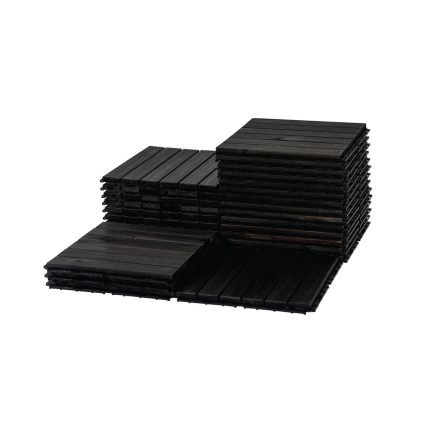
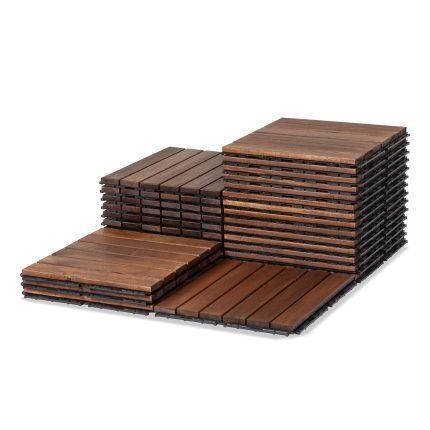
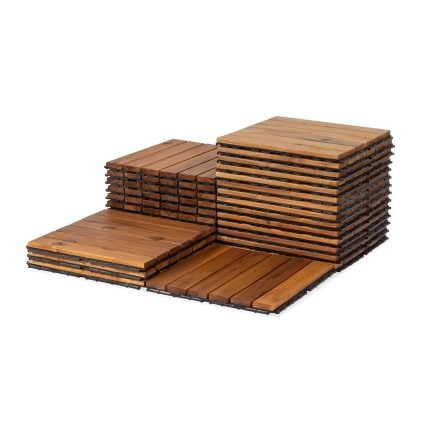
Round Joint Acacia Wood Deck Tiles, 6-Slat Interlocking Design for Indoor & Outdoor (Set of 27)
ColorOriginal price was: $104.02.$77.05Current price is: $77.05.
-
Sale
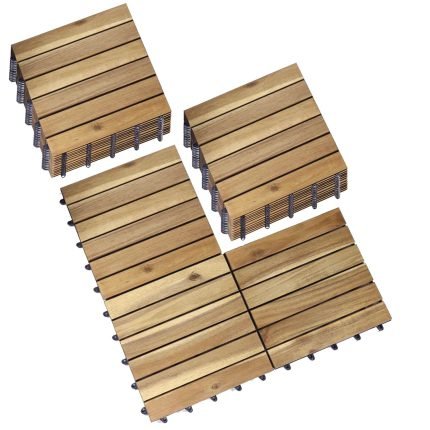
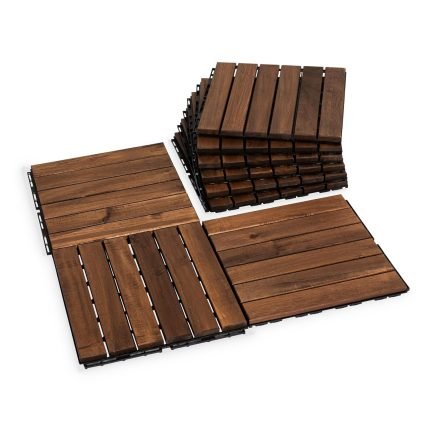
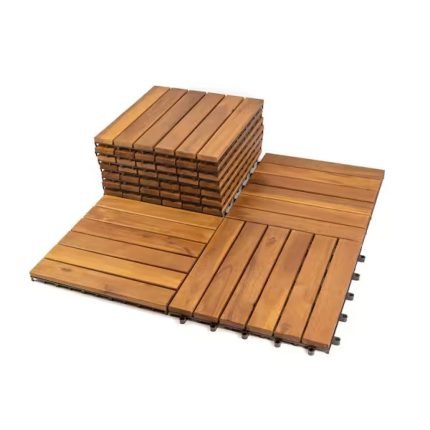 Decking Tiles
Square Joint Acacia Wood Deck Tiles, 6-Slat Interlocking Design for Indoor & Outdoor (Set of 27)
ColorOriginal price was: $104.02.$77.05Current price is: $77.05.
-
Sale
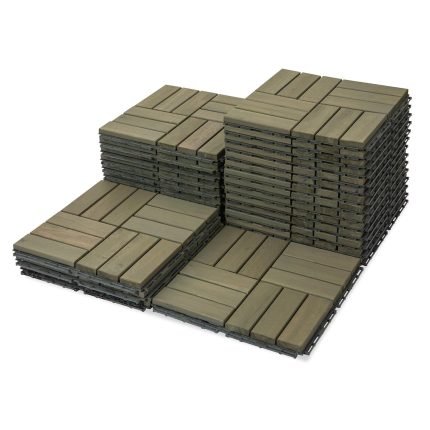
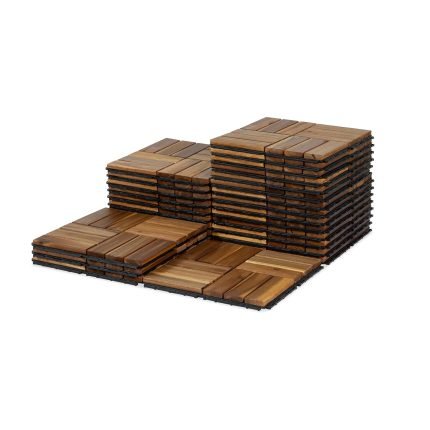
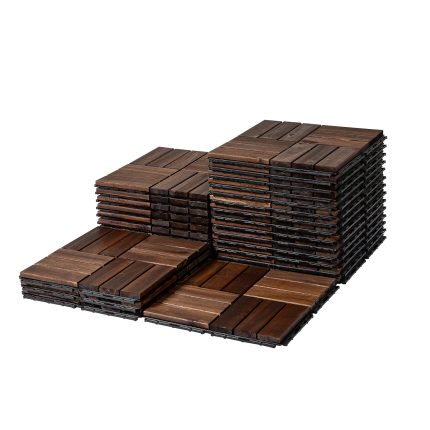 Decking Tiles
Round Joint Acacia Wood Deck Tiles, 12-Slat Interlocking Design for Indoor & Outdoor (Set of 27)
ColorPrice range: $77.05 through $79.93
Drawbacks to Consider Before Buying
Natural wood needs care
Outdoor wood responds to sunlight, moisture, temperature changes, and airflow. Sweep away grit, clean spills gently, and allow the surface to dry. If you want to retain a warm brown appearance, an exterior wood treatment suitable for the product may be needed periodically. If left untreated, natural weathering can change the color toward a grey patina.
The base surface still matters
Deck tiles do not repair structural damage, poor drainage, major slopes, or an unstable floor. They can follow irregularities below them, leading to rocking pieces or uneven joints. Covering an existing problem can also make inspection more difficult. Address cracks, unsafe surfaces, blocked drains, and persistent pooling before installing any outdoor floor tiles.
Debris can collect underneath
The raised backing allows water to travel beneath the walking surface, but it can also collect dust, leaves, and other debris. Areas near trees or exposed to wind may require sections to be lifted occasionally for cleaning. A modular floor is easier to access than permanent decking, but that maintenance should still be part of your decision.
Edges and cuts need planning
A neat installation often requires measuring, balancing the starting point, and trimming the final rows. Narrow cuts can look awkward or leave weak edge pieces. Door clearance, rail posts, drains, and trip edges must be considered before ordering and before the first tile is connected.
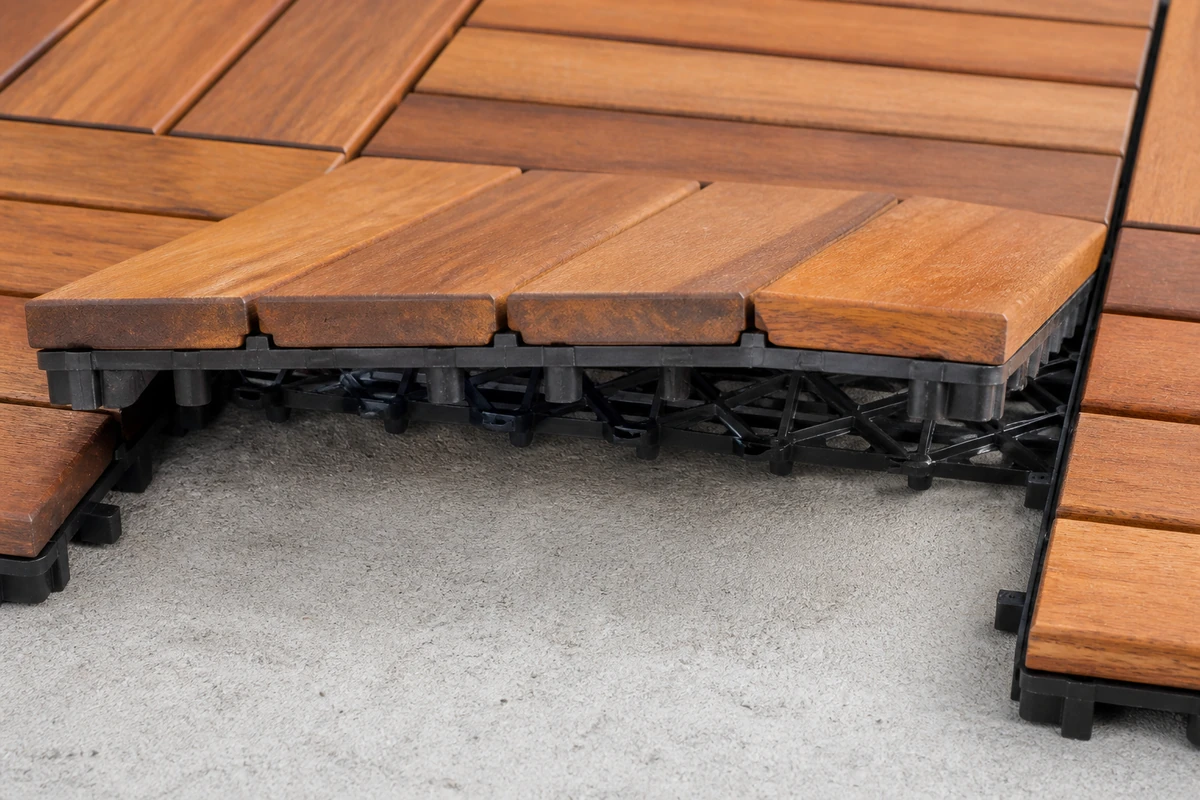
The raised interlocking backing supports modular installation and leaves space beneath the wood surface.
What Do Wood Deck Tiles Really Cost?
VictoryRelax’s current acacia wood deck tiles are sold in sets of 27, with each set covering approximately 27 square feet. At the time of writing, the available Square Joint and Round Joint options are listed from $77.05 to $79.93 per set, depending on the design and color. That works out to approximately $2.85 to $2.96 per square foot before tax, based on the stated coverage.
The regular listed prices currently range from $104.02 to $107.91 per set, or approximately $3.85 to $4.00 per square foot. Prices and availability can change, so confirm the current amount on the selected product page before calculating the final project budget.
To estimate the number of sets, divide the usable floor area by approximately 27 square feet and round up to the next full set. Add a modest allowance for cuts, irregular edges, and future replacement pieces. For example, a 50-square-foot rectangular balcony would require at least two sets before accounting for trimming or waste.
The complete project cost may also include surface preparation, cutting tools, edge finishing, cleaning supplies, and a compatible exterior wood-care product. A simple rectangular balcony over sound concrete will usually require less preparation than an irregular patio with posts, drains, or several trimmed edges.
Long-term value depends on drainage, exposure, maintenance, and whether compatible replacement tiles remain available. Save the exact joint design, slat count, and color after ordering so future additions match the installed floor.
How Long Do Wood Deck Tiles Last?
There is no responsible universal lifespan for every installation. Durability varies with wood species, product construction, sun and rain exposure, drainage, airflow, foot traffic, cleaning habits, and seasonal storage. A covered balcony in a moderate setting experiences very different conditions from an uncovered patio exposed to standing water and intense sun.
You can improve the useful life of wood deck tiles by keeping the base drainable, removing trapped debris, avoiding prolonged standing water, and following the product’s care guidance. Inspect the floor after severe weather and replace damaged or unstable pieces promptly. Where winters are harsh or the area is not used seasonally, lifting, cleaning, drying, and storing the tiles may reduce exposure.
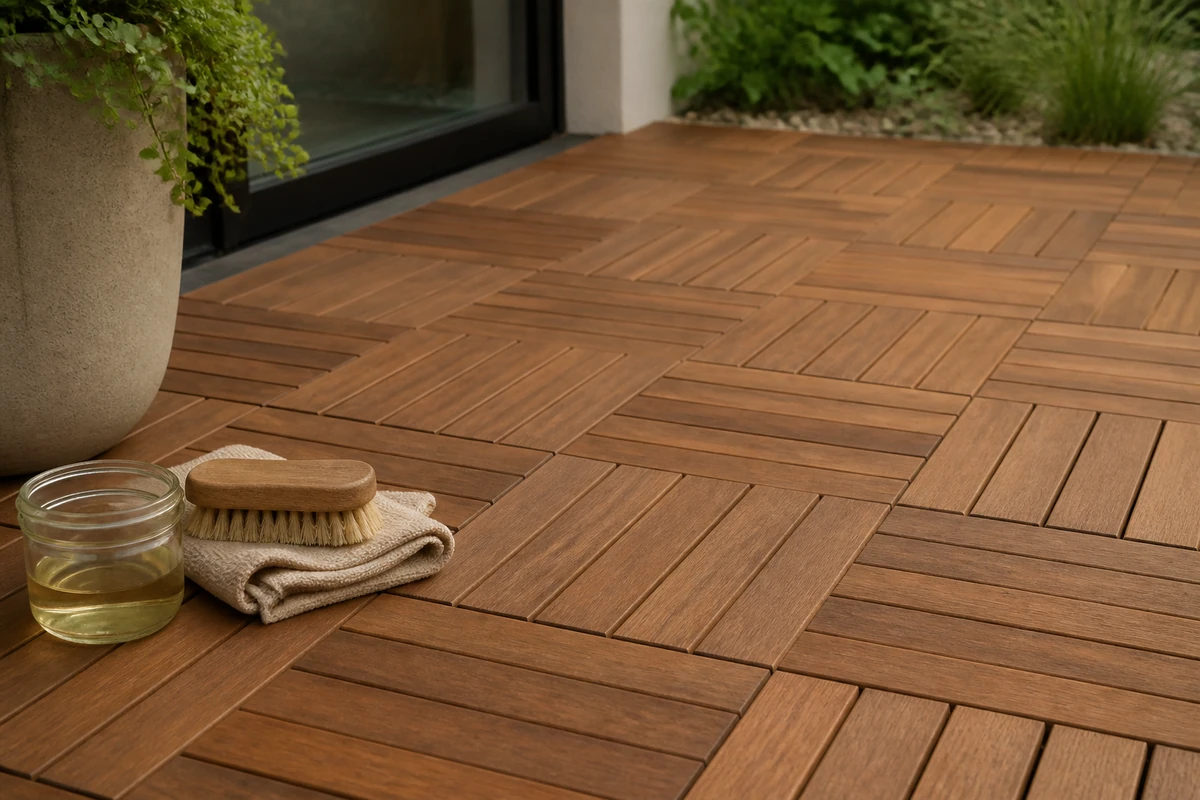
Routine cleaning and suitable exterior wood care can help maintain acacia deck tiles.
Wood Deck Tiles vs. Other Options
Wood tiles are best judged against the outcome you want. Composite tiles may appeal to shoppers prioritizing lower routine wood care, while artificial turf creates a softer visual effect but has different drainage and cleaning considerations. Outdoor rugs are quick to place but do not create the same raised modular floor. A permanent deck can provide a structural platform, but it involves a very different level of planning and construction.
If your main decision is between wood and composite, see our detailed acacia vs composite deck tiles comparison. This article focuses instead on whether the modular wood format itself provides enough practical and aesthetic value for your project.
More Deck Tile Guides
When Wood Deck Tiles Are Worth It
They are a strong fit when you have a suitable hard surface, want the appearance and feel of natural wood, and prefer a modular installation. They can also make sense when access beneath the floor matters or when replacing one section is more attractive than repairing a continuous surface.
For balcony projects, confirm drainage, door clearance, floor-load requirements, wind exposure, and building rules. Our guide to the best deck tiles for balcony spaces explains those constraints and compares the available surface patterns in more detail.
When They May Not Be Worth It
Choose another approach if the base is loose, unstable, structurally unsafe, or unable to drain. Wood tiles are also a poor match if you expect the appearance to remain unchanged outdoors without maintenance. They should not be used to hide defects that need professional repair.
They may also disappoint when buyers mix incompatible joint systems, underestimate cutting waste, or select a surface solely from a product photo without checking dimensions and clearance. Good results begin with a realistic assessment of the space rather than the flooring alone.
Frequently Asked Questions
Are wood deck tiles worth it for a balcony?
They can be a practical balcony upgrade when the existing floor is hard, stable, level enough for the tiles, and able to drain. Check door clearance, building rules, permitted loads, and wind exposure before buying.
Can wood deck tiles stay outside all year?
That depends on the product and local conditions. Sun, rain, freezing weather, standing water, and poor airflow can accelerate weathering. Follow the manufacturer’s care guidance and consider seasonal storage where exposure is severe.
Do wood deck tiles need to be sealed or oiled?
Care requirements vary. A suitable exterior wood oil may help retain a warmer color, while untreated wood may develop a grey patina. Use only a treatment compatible with the product and follow its instructions.
Can deck tiles go directly over grass or soil?
Loose grass or soil is generally not a suitable direct base because it shifts and becomes uneven. A properly prepared, compacted, drainable foundation is needed before installing tiles in those locations.
Can individual deck tiles be replaced?
Many interlocking systems allow damaged pieces to be disconnected and replaced. Confirm that the replacement uses the same dimensions and compatible connector system as the existing installation.
Final Verdict: Are Wood Deck Tiles Worth It?
Are wood deck tiles worth it? Yes, when their particular strengths match the project: natural warmth, modular installation, access beneath the floor, and replaceable sections. They offer the most value over a stable, drainable base and for owners who are comfortable with routine wood care.
They are not a shortcut around structural repairs, drainage problems, or maintenance. Measure carefully, verify product coverage and compatibility, and plan how the material will weather in your setting. With realistic expectations, outdoor decking tiles can be a practical way to turn a plain hard surface into a more inviting outdoor space.