
Choosing between acacia vs composite deck tiles comes down to one question: do you want the natural warmth of real wood, or the low-maintenance longevity of engineered material? Both snap together over an existing surface, both transform a tired balcony or patio in an afternoon, and both cost far less than a built deck. Yet they age, feel, and perform very differently. This guide compares the two on looks, durability, cost, and upkeep so you can choose the right outdoor floor with confidence.
Acacia vs Composite Deck Tiles at a Glance
At their core, both are interlocking deck tiles that click onto a plastic base and rest on top of concrete, tile, or a balcony floor. The difference is the surface. Acacia tiles use slats of solid hardwood, while composite tiles use a blend of wood fibre and recycled plastic. That single material choice drives almost every practical difference between them.
Here is how the two compare on the factors most buyers weigh up:
- Look and feel: acacia shows genuine wood grain and warmth; composite mimics wood but reads more uniform.
- Maintenance: acacia needs occasional oiling; composite is essentially wipe-clean.
- Lifespan: quality acacia lasts 10-15 years; composite often reaches 25-30.
- Price: acacia is usually the more affordable entry point.
- Comfort: acacia stays cooler underfoot and feels better barefoot near pools.
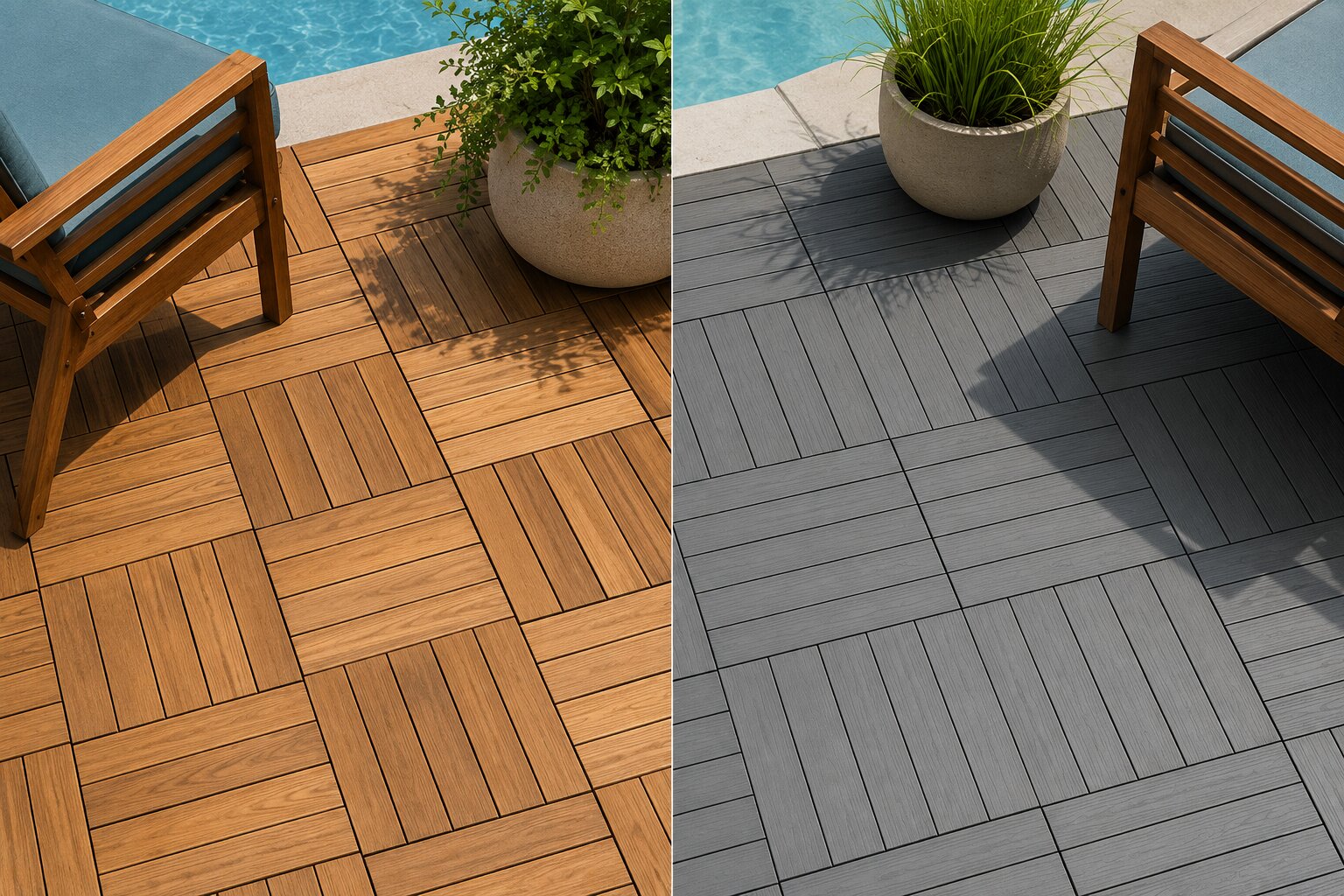
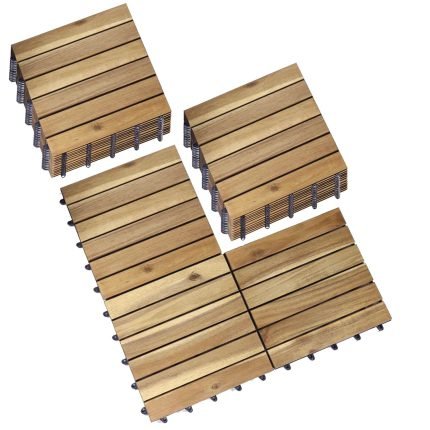
Acacia vs composite deck tiles – natural acacia wood interlocking tile surface
Acacia Wood Deck Tiles: Natural Warmth
Acacia is a dense tropical hardwood with high natural oil content, which gives it real resistance to moisture, rot, and insects with no chemical treatment. As the surface for wood deck tiles, it brings a warmth and grain variation that engineered boards simply cannot fake. Every set looks a little different, and the timber gains character as it ages.
The trade-off is upkeep. Left untreated, acacia weathers to a silver-grey patina within a season or two. A light coat of outdoor wood oil once or twice a year keeps the original honey tone and extends the tiles’ life. Because each piece is modular, a damaged tile lifts out and swaps in without touching the rest of the floor – a genuine edge over sheet decking.
Composite Deck Tiles: Low-Maintenance Durability
Composite tiles trade natural character for convenience. Made from wood fibre bound in recycled polymer, they shrug off fading, staining, and moisture with almost no care beyond an occasional rinse. Colour runs consistent across the whole floor, and most carry longer manufacturer warranties than any natural wood.
That durability comes at a price. Composite usually costs more per square foot, and the surface – convincing from a distance – lacks the depth of real grain up close. It also holds more heat in direct sun, so a rooftop terrace can feel warm underfoot on a summer afternoon. For a set-and-forget floor in a high-traffic or hard-to-reach spot, though, it is hard to beat.
More in Outdoors
- Wood Deck Tiles Buying Guide: How to Choose
- Can Wood Chairs Go Outside? A Practical Outdoor Care Guide
- Fall Front Porch Seating Ideas With Wood Chairs
- How to Maintain Deck Tiles: Acacia Cleaning & Care
- Solid Acacia Wood Dining Chairs: 7 Reasons to Choose Them
- Best Acacia Wood Outdoor Table: Picks by Space & Seating
Cost, Lifespan and Maintenance Compared
Before comparing prices alone, weigh the deck tile benefits against the upkeep and base preparation your space will need. A material that suits the floor and your routine is more useful than a promise of maintenance-free use.
Budget is where the acacia vs composite deck tiles decision often turns. Acacia gives you a real-wood floor for the lowest upfront cost, but asks for a little seasonal maintenance in return. Composite reverses that: more to buy, less to maintain, and a longer service life if you plan to stay put.
Think about your time horizon, too. For a rented balcony or a look you may want to refresh in a few years, affordable acacia that you can lift and take with you makes sense. For a permanent home terrace you would rather never think about again, composite’s longevity can justify the premium. Many shoppers comparing outdoor deck tiles find the answer is simply a matter of how long they intend to keep the floor.
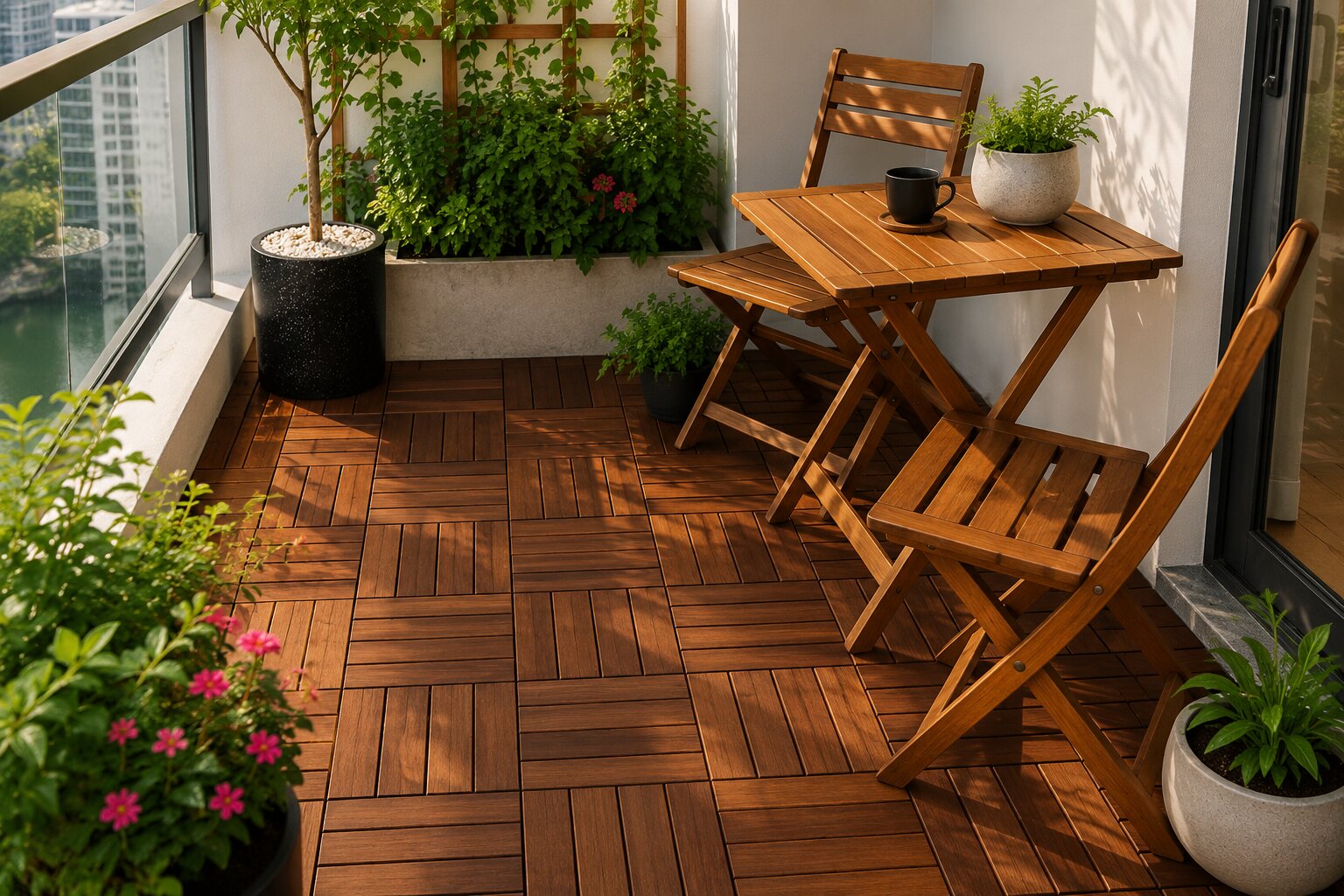
Acacia vs Composite Deck Tiles: Which Should You Choose?
Once you have chosen a material, a deck tile buying guide helps you compare the exact joint design, clearance and set coverage. Look at the outdoor decking tiles as part of your wider acacia wood outdoor furniture layout, including the areas beneath seating and planters.
There is no single winner – the right pick depends on your priorities:
- Choose acacia for natural warmth, barefoot comfort, a lower price, and a renter-friendly floor you can move.
- Choose composite for maximum lifespan and near-zero maintenance, if you don’t mind paying more.
For most balconies, patios, and garden corners where looks and feel matter, quality acacia hits the sweet spot. If you want a genuine timber floor that installs in an afternoon, browse our range of acacia wood deck tiles and pick the set that fits your space.
Recommended for you
-
Sale
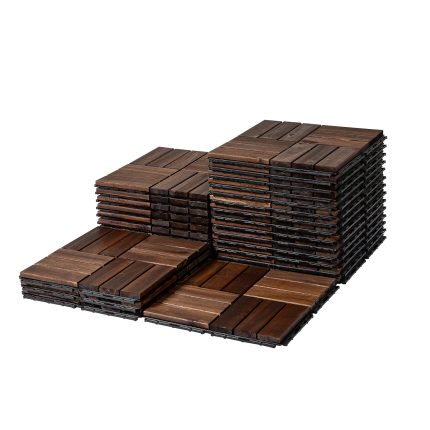 Decking Tiles
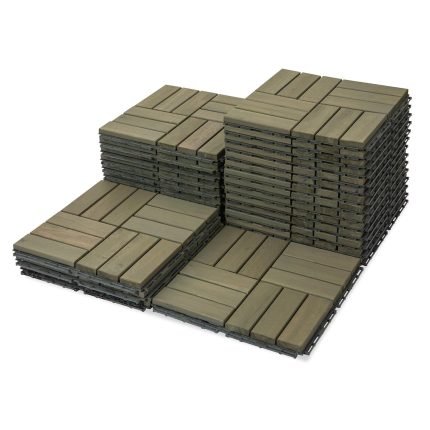
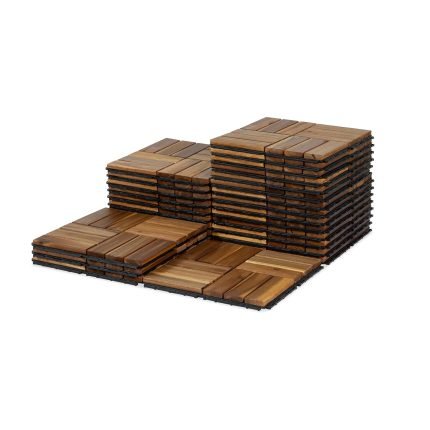
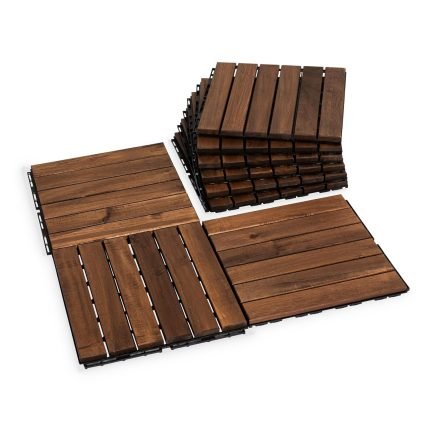
Round Joint Acacia Wood Deck Tiles, 12-Slat Interlocking Design for Indoor & Outdoor (Set of 27)
ColorPrice range: $77.05 through $79.93
-
Sale
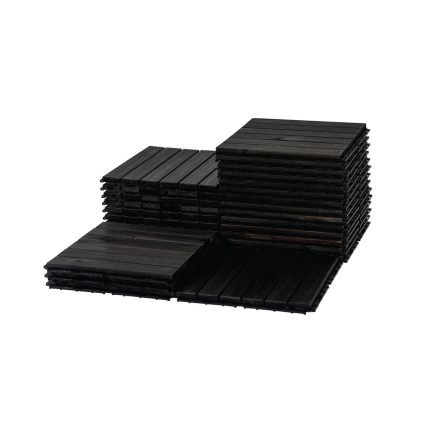
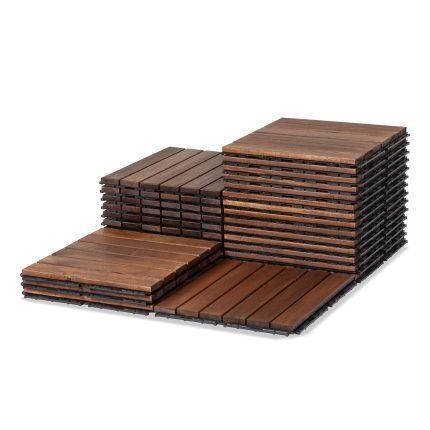
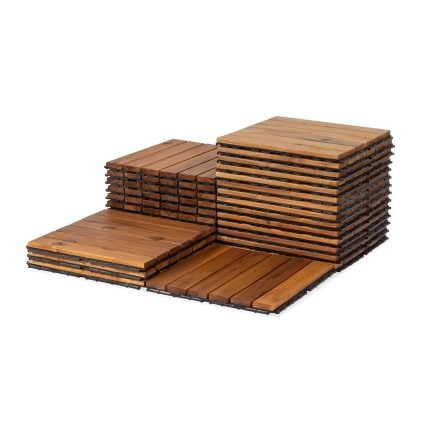 Decking Tiles
Round Joint Acacia Wood Deck Tiles, 6-Slat Interlocking Design for Indoor & Outdoor (Set of 27)
ColorOriginal price was: $104.02.$77.05Current price is: $77.05.
-
Sale
 Decking Tiles
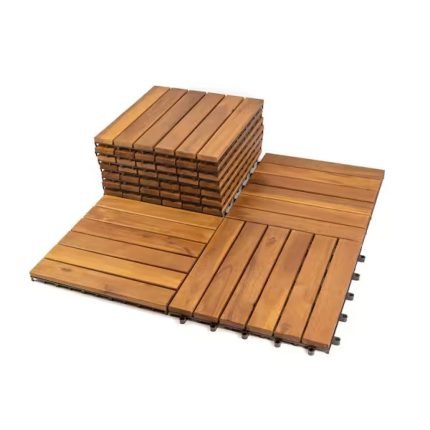
Square Joint Acacia Wood Deck Tiles, 6-Slat Interlocking Design for Indoor & Outdoor (Set of 27)
ColorOriginal price was: $104.02.$77.05Current price is: $77.05.
Frequently Asked Questions
For a wood surface, include deck tile maintenance in the decision from the start: clearing drainage gaps and inspecting the finish should be practical in the space you are planning.
Are acacia deck tiles waterproof?
Acacia is water-resistant rather than fully waterproof. The slatted design drains rain and the wood’s natural oils repel moisture, but re-oiling once or twice a year keeps that water resistance at its best.
Do composite deck tiles look fake?
From a distance modern composite is convincing, but up close it lacks the grain depth and colour variation of real acacia. If a natural look matters most, wood wins.
Acacia vs Composite Deck Tiles: Which lasts longer?
Composite typically lasts 25-30 years versus 10-15 for quality acacia. Regular oiling improves acacia’s lifespan; with no care at all, it weathers faster.
Both acacia and composite deck tiles turn a bare surface into a finished outdoor floor in minutes, so the real choice is warmth versus low maintenance – natural wood you can move and refresh, or engineered material you can forget. If you love the look and feel of real timber at a friendly price, explore our snap together deck tiles and start planning your outdoor space today.