
Best deck tiles for balcony spaces should make a small outdoor area more comfortable without creating a difficult renovation project. The right tiles need to drain rainwater, sit securely on a suitable surface, feel pleasant underfoot, and look proportional in a compact setting. For renters, they should also lift away without glue or permanent fasteners.
Acacia wood interlocking tiles meet those needs particularly well. They bring the warmth of a timber floor while using a modular system that is easier to install and replace than conventional decking. This guide explains what to check before buying, how VictoryRelax’s four current tile configurations differ, and how to choose a practical option for your balcony.
What Makes the Best Deck Tiles for Balcony Use?
A balcony places different demands on flooring than a large ground-level patio. Space is limited, edges and door thresholds matter more, and water must continue moving toward the existing drain. Therefore, the best balcony tile is not simply the most attractive option. It must work with the surface and dimensions already in place.
Start with the base. Interlocking deck tiles perform best over a hard, flat, stable floor such as concrete or existing exterior tile. The slatted top and raised backing allow water to move below the walking surface. However, the tiles should never block a drain or conceal an existing slope that directs water away from the building.
Next, check clearance at the balcony door. The complete tile height must remain below the door sweep and threshold. Also consider whether the floor can be lifted for cleaning. Modular interlocking deck tiles are useful because individual sections can be disconnected when leaves or dirt collect underneath.
Why Acacia Wood Works Well for Balcony Flooring
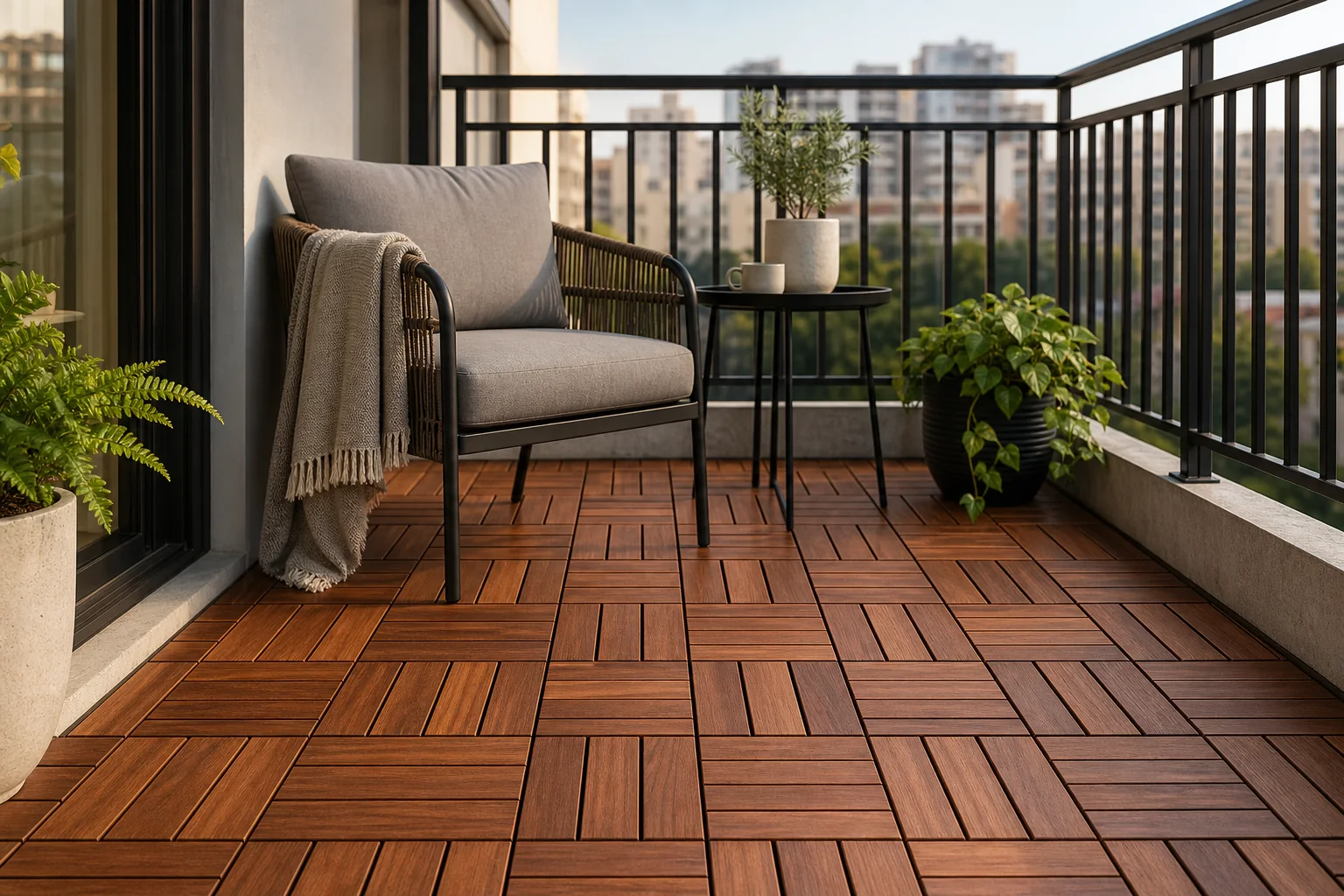
Acacia is a dense hardwood with a rich natural grain, so it gives a balcony a warmer and more finished appearance than exposed concrete. It also suits compact outdoor spaces because the visual texture can make the floor feel intentional without requiring a full structural deck.
For shoppers comparing balcony flooring tiles, wood offers a different experience from plastic or artificial turf. The surface feels natural underfoot and pairs easily with outdoor seating, planters, and neutral textiles. The tradeoff is maintenance. Wood should be cleaned gently, allowed to dry, and treated periodically with an exterior wood oil if you want to preserve its original warm color.
Without oil, acacia can gradually weather toward a silver-grey tone. Balconies with intense sun, frequent rain, or limited airflow may need more frequent inspection. Good drainage and routine cleaning matter as much as the wood species itself.
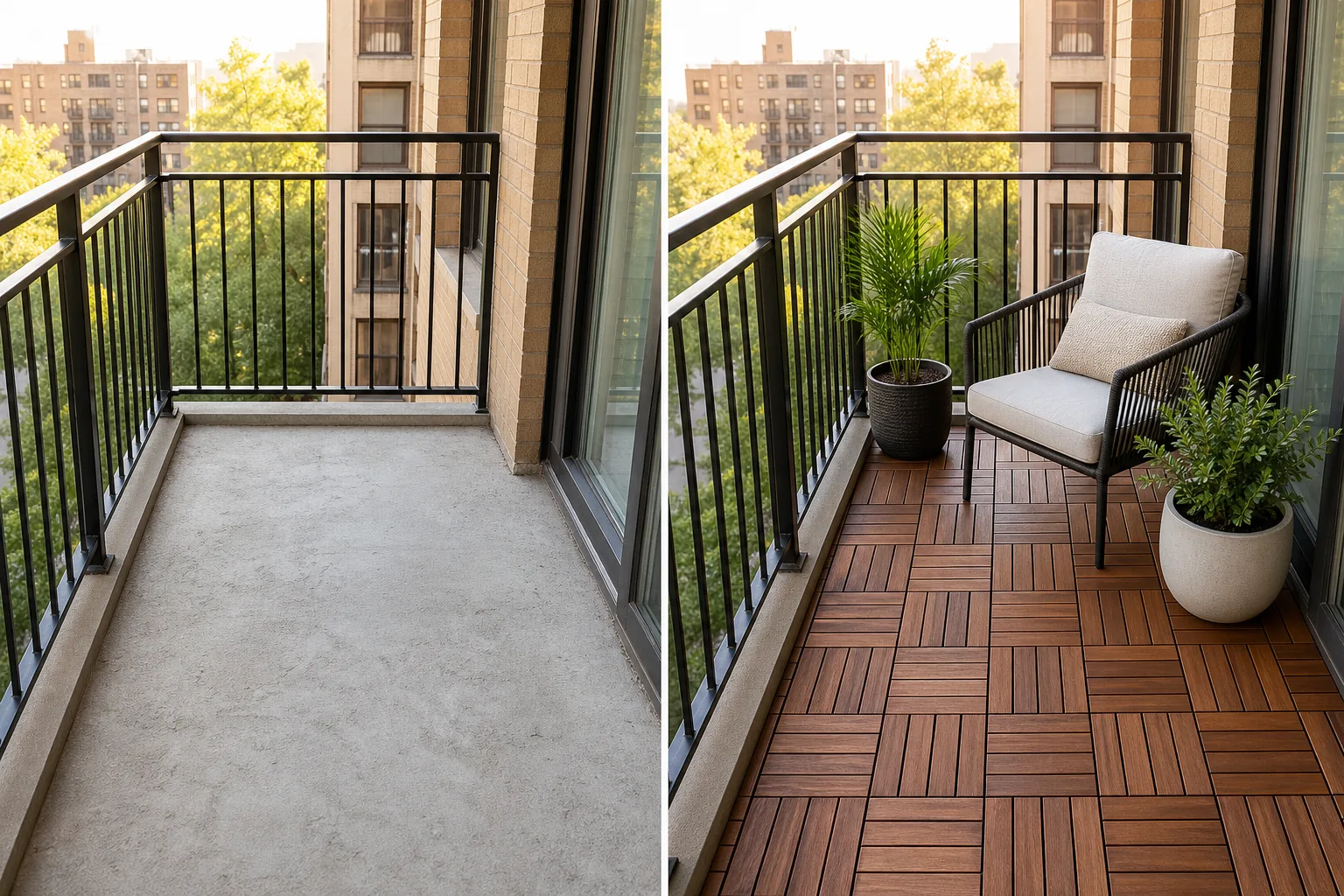
Best deck tiles for balcony spaces can turn bare concrete into renter friendly balcony flooring.
6-Slat or 12-Slat Tiles: Which Pattern Fits a Small Balcony?
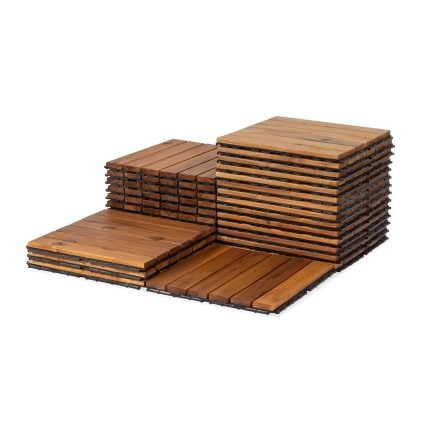
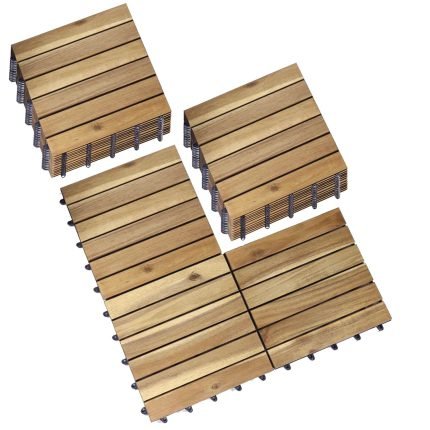
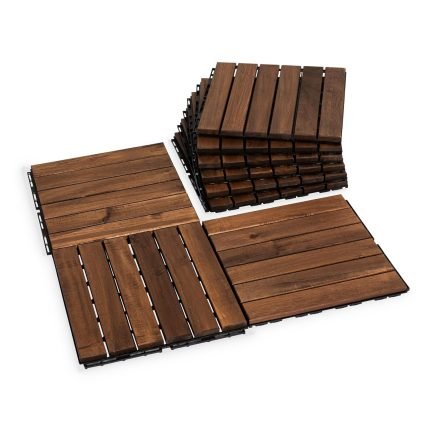
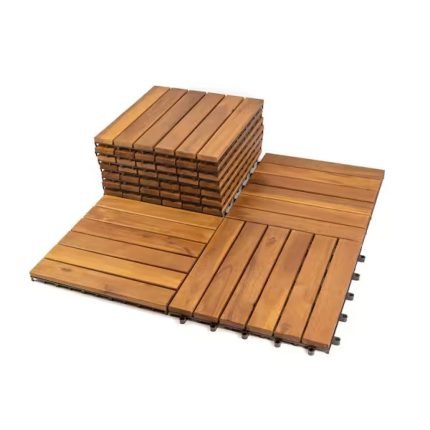
VictoryRelax currently offers 6-slat and 12-slat acacia tile designs. Both use the same modular idea, but the visible pattern changes the character of the floor. A 6-slat layout creates broader lines and a simpler look. It can work especially well when the balcony already contains planters, furniture, and decorative screens.
A 12-slat layout creates finer lines and more surface detail. On a narrow balcony, those smaller divisions may make the flooring feel more intricate. The better choice is primarily visual, so compare product photos against the scale and style of your furniture rather than assuming that more slats automatically mean better performance.
Any slatted floor can collect dust around the grooves. If your balcony receives windblown leaves, plan to sweep the surface and occasionally lift sections for deeper cleaning.
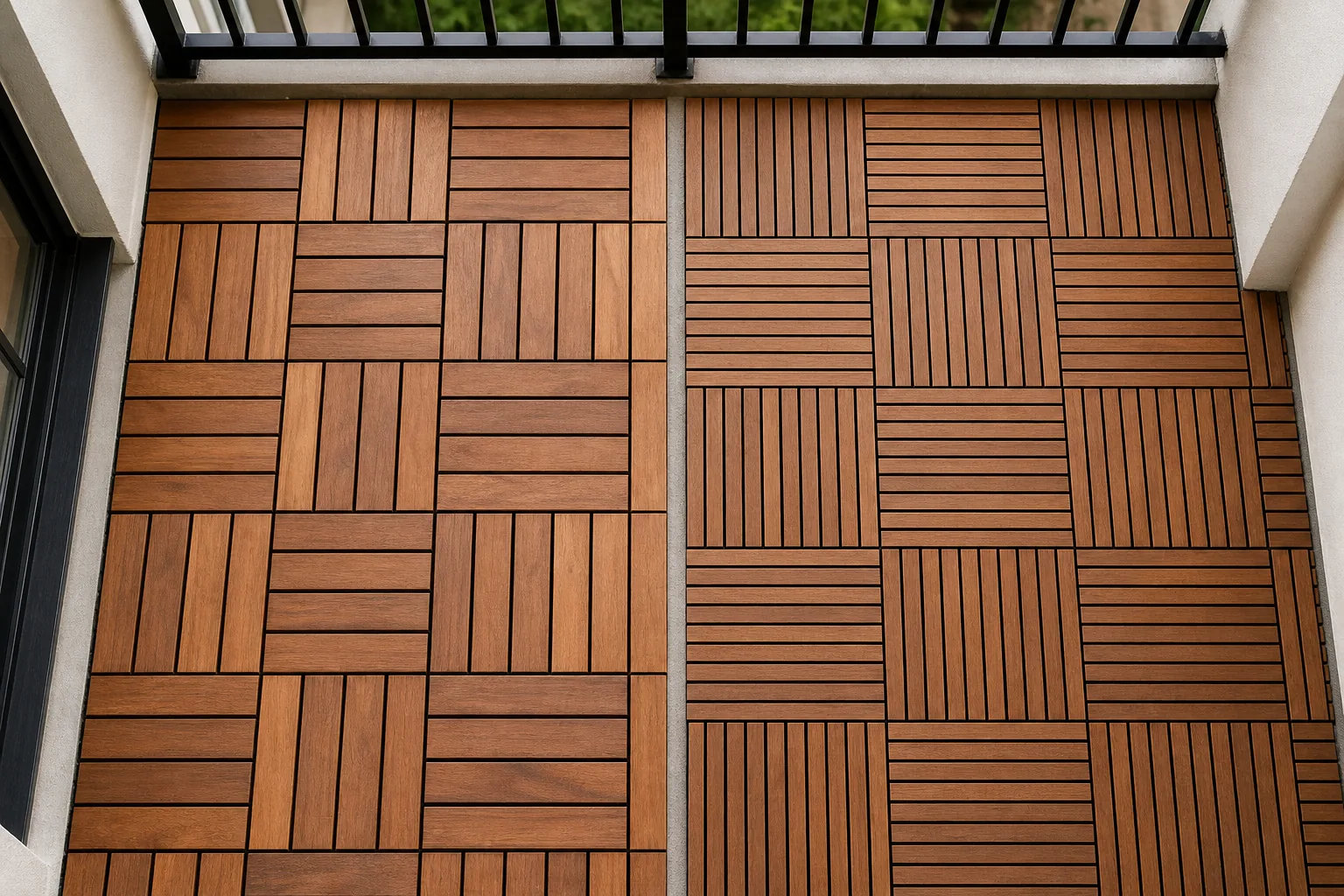
Compare 6-slat and 12-slat interlocking balcony tiles when choosing the best deck tiles for balcony spaces.
Square Joint or Round Joint: How to Choose
When choosing deck tiles, compare the exact connector configuration as well as the slat pattern. Matching nominal dimensions alone do not confirm that two systems will fit together.
The current range also includes Square Joint and Round Joint configurations. These names identify the tile variants and connector presentation; they do not change the basic goal of creating a modular acacia surface. Look closely at the product images, edge appearance, and how the connection pattern will look across your planned layout.
Use one compatible configuration throughout the main installation unless the product specifications explicitly confirm that different versions connect correctly. Mixing systems based only on their shared 12-by-12-inch format can lead to alignment problems. If you may expand the floor later, save the exact product name and variant after ordering.
The four published VictoryRelax options are Square Joint 6-slat, Square Joint 12-slat, Round Joint 6-slat, and Round Joint 12-slat. First choose the joint configuration you prefer, then select the 6- or 12-slat surface pattern.
Shop Acacia Deck Tiles for Balconies
-
Sale
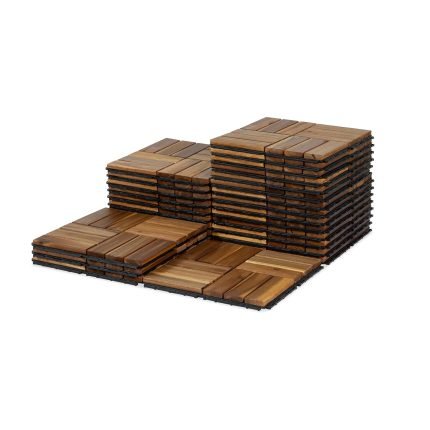
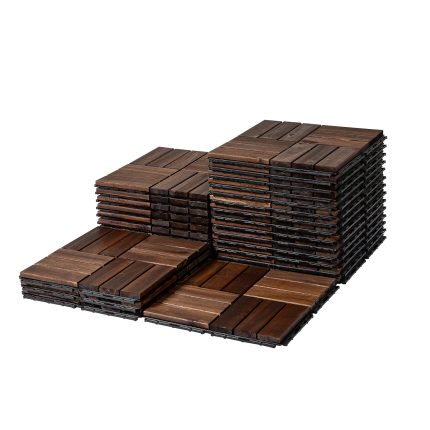 Decking Tiles
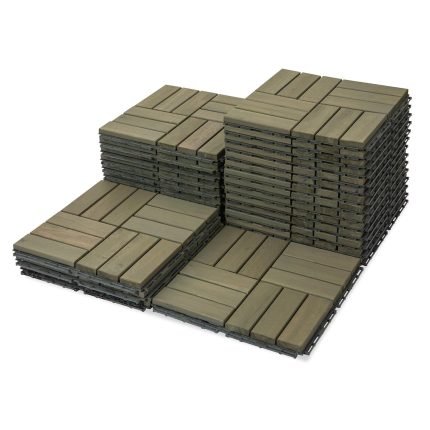
Round Joint Acacia Wood Deck Tiles, 12-Slat Interlocking Design for Indoor & Outdoor (Set of 27)
ColorPrice range: $77.05 through $79.93
-
Sale
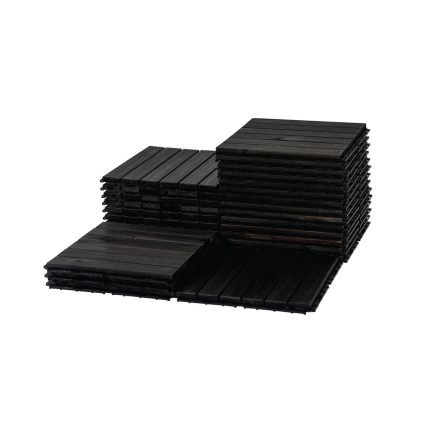
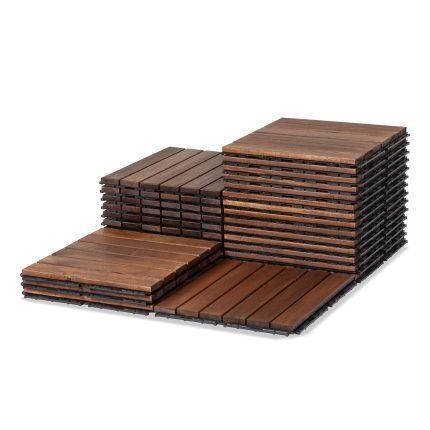
 Decking Tiles
Round Joint Acacia Wood Deck Tiles, 6-Slat Interlocking Design for Indoor & Outdoor (Set of 27)
ColorOriginal price was: $104.02.$77.05Current price is: $77.05.
-
Sale
 Decking Tiles
Square Joint Acacia Wood Deck Tiles, 6-Slat Interlocking Design for Indoor & Outdoor (Set of 27)
ColorOriginal price was: $104.02.$77.05Current price is: $77.05.
Measure Your Balcony Before Ordering
Before you calculate deck tiles, sketch the area you actually intend to cover, including the floor beneath movable furniture. This gives you a clearer starting point for complete-set quantities and perimeter cuts.
Accurate measurement prevents both shortages and unnecessary leftover material. Measure the usable length and width of the floor, excluding fixed cabinets or areas that must remain open for drainage. Multiply length by width to estimate the square footage, then compare that figure with the coverage shown on the product listing.
VictoryRelax’s current sets contain 27 interlocking tiles, and the category guidance estimates roughly 27 square feet of coverage per set. An irregular balcony may require cuts at walls, posts, or corners, so add a modest waste allowance. Five to ten percent is practical, with the higher end better suited to layouts requiring several trimmed edge pieces.
Before cutting, dry-lay a few rows. Start from the most visible straight edge and see where the final row lands. A small adjustment at the starting side can prevent an awkward narrow strip at the opposite wall. This step is especially valuable for apartment balcony flooring, where every inch affects furniture clearance.
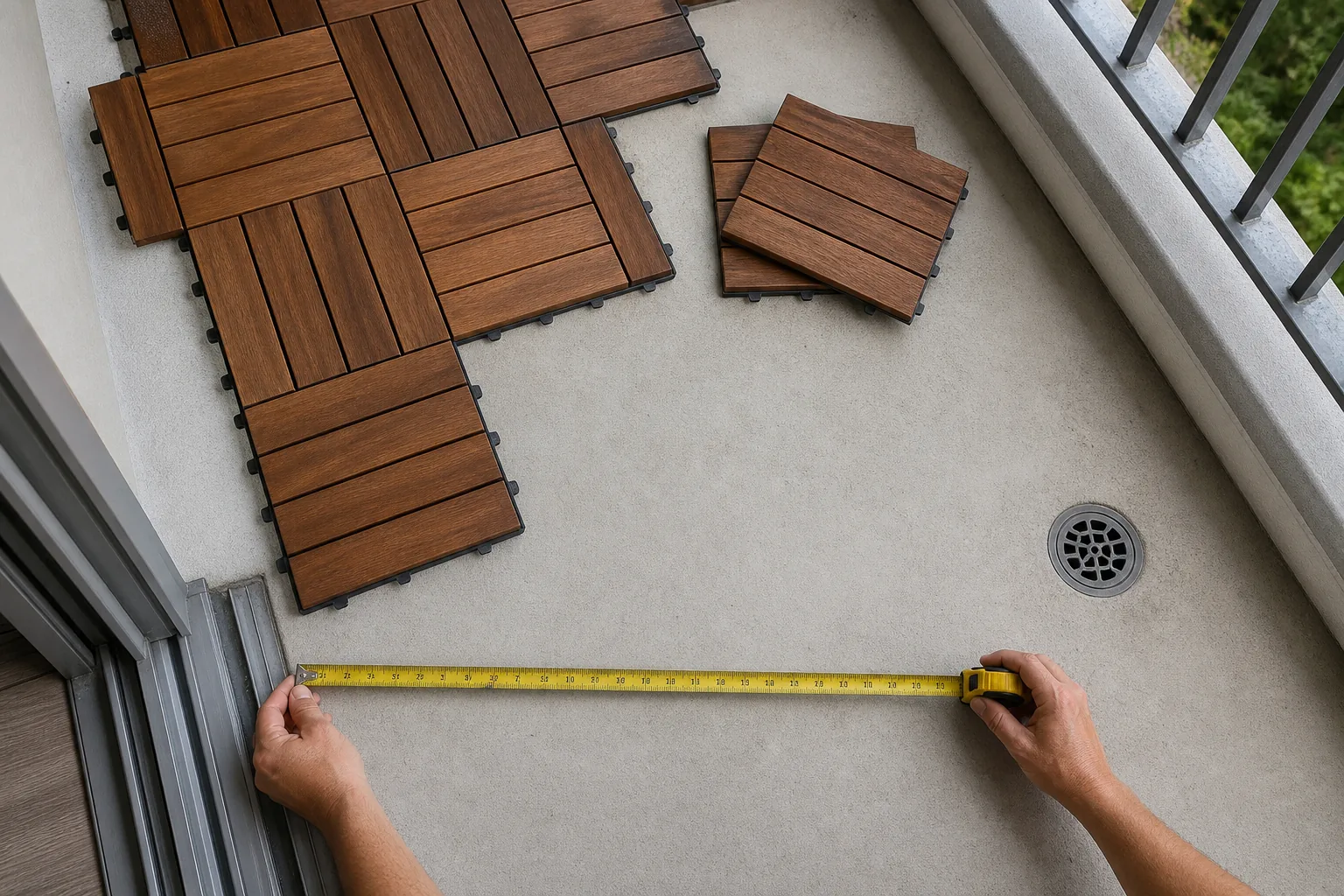
Measure apartment balcony flooring carefully before choosing the best deck tiles for balcony installation.
Installation and Renter-Friendly Considerations
Most renter friendly balcony flooring succeeds because it avoids adhesive, screws, and permanent changes. Interlocking tiles rest over the existing hard surface and connect to one another. As a result, they can usually be lifted when the lease ends or when access to the original floor is needed.
Clean and dry the balcony before installation. Remove grit that could keep the tiles from sitting level, and test the drainage path with water if building rules allow. If you want a complete surface-preparation, layout, cutting, and fitting walkthrough, our guide on how to install deck tiles explains the process step by step. Connect tiles row by row without forcing the joints, measure carefully around walls and rail posts, and keep all required drainage gaps open.
However, “removable” does not automatically mean “approved.” Some buildings restrict balcony coverings because of drainage, fire, wind, or inspection requirements. Check your lease or building policy before ordering. In exposed high-rise locations, make sure edge pieces cannot lift in strong wind.
More in Outdoor
- Best Wood Patio Dining Sets by Space and Seating
- Can Wood Chairs Go Outside? A Practical Outdoor Care Guide
- How to Install Deck Tiles: Step-by-Step Guide
- Solid Acacia Wood Dining Chairs: 7 Reasons to Choose Them
- Best Acacia Wood Outdoor Table: Picks by Space & Seating
- How to Maintain Deck Tiles: Acacia Cleaning & Care
Simple Care for Acacia Deck Tiles
Routine care keeps acacia deck tiles for balcony installations consistent. Sweep away grit, clean spills with mild soap and water, and let the surface dry. Periodically lift a section to remove debris below and confirm that the drain remains clear.
Use suitable outdoor wood oil if you want to retain the warm brown color. Otherwise, allow the wood to develop a natural grey patina. Inspect the tiles after severe weather and address loose parts, rough areas, or trapped moisture promptly.
Frequently Asked Questions
The practical deck tile benefits depend on a floor you can access and care for, not just its appearance on installation day. Choose outdoor decking tiles that suit the drainage, door clearance and cleaning access in your balcony’s acacia wood outdoor furniture arrangement.
Can deck tiles be installed directly over a concrete balcony?
Yes, provided the concrete is hard, stable, reasonably level, and able to drain correctly. Clean the surface first and keep all drains and required gaps unobstructed.
Are wood deck tiles suitable for renters?
Interlocking wood tiles are often renter-friendly because they require no glue or screws and can be lifted later. However, always confirm the covering is permitted by your lease or building rules.
How do I choose between 6-slat and 12-slat tiles?
Choose based mainly on visual scale. Six-slat tiles create broader, simpler lines, while 12-slat tiles create a finer pattern. Compare both with the size and style of your balcony furniture.
How many deck tiles do I need for a balcony?
Calculate the usable square footage and divide it by the coverage per set. Add about 5–10% for cuts and irregular edges, then verify the quantity against the selected product listing.
Will acacia deck tiles need maintenance?
Yes. Sweep and clean them regularly, keep drainage clear, and use exterior wood oil periodically if you want to preserve the original warm tone.
Choosing the Right Balcony Deck Tiles
The best deck tiles for balcony projects balance appearance with drainage, clearance, compatibility, and easy maintenance. Measure carefully, choose one Square or Round Joint system, then select the 6- or 12-slat pattern that suits your space. With a flat base and a clear drainage path, wood deck tiles can turn a plain balcony into a warmer and more usable outdoor room without a permanent renovation.