
This outdoor table size guide helps you plan a dining area for two, four, six or eight people without filling every spare inch of your patio. Start with your everyday guest count, then check the space needed for the table, occupied chairs and movement around them. A tabletop that fits between two walls can still leave you with a dining area that is awkward to use. This is the table-side master: for the chair side, see how to choose outdoor chairs; for indoor chair-to-table pairing, see choose wood chair for dining table.
The measurements below are estimated planning starting points, not guaranteed seating capacities or specifications for Victory Relax products. Chair width, table legs and the way you serve meals all affect the result. Use this outdoor table size guide to narrow your choices, then test the complete arrangement before selecting a garden table.
Outdoor Table Size Guide: A Starting Point for 2-8 Seats
Start with the outdoor table size guide below to sketch possible layouts. Choose the roomier end of a range when you use wide armchairs, serve shared dishes or prefer more space between diners. A smaller top may work for drinks without being equally comfortable for a full meal.
| People | Estimated tabletop starting point | What to check |
|---|---|---|
| 2 | Round or square: about 30-36 inches across | Two complete place settings, chair positions and room to enter each seat |
| 4 | Round: about 42-48 inches in diameter; rectangular: about 48-60 x 34-38 inches | Space for serving dishes and clearance between chairs near the corners |
| 6 | Round: about 54-60 inches in diameter; rectangular: about 72-84 x 36-40 inches | Leg placement, end seats and the width of all six chairs |
| 8 | Round: about 60-72 inches in diameter; rectangular: about 84-96 x 40-42 inches | Comfort with every seat occupied and a usable route around the group |
Two seats: coffee breaks or everyday meals?
For two-person meals, apply the outdoor table size guide to the items you actually use. Two cups need much less space than dinner plates, glasses and a serving bowl. To check a compact outdoor bistro table, arrange the items you normally use inside its proposed footprint on an existing surface. If they only fit when pushed tightly together, consider a larger top or a separate serving surface.
Four seats: leave room in the middle
For four seats, the outdoor table size guide allows for central serving space as well as individual place settings. Test the widest chairs you intend to use. Their backs or armrests may meet at the corners even when the tabletop looks generous. A round shape can ease movement past corners, but its chairs still need a complete seating zone.
Six or eight seats: test the end positions
When using the outdoor table size guide for six or eight people, check the end seats carefully. Corner legs, a trestle or a support rail can occupy the space where someone expects to put their knees. Sketch each chair individually rather than counting seats from table length alone. For occasional guests, compare an everyday arrangement with the larger hosting layout before deciding how much permanent floor space to use.
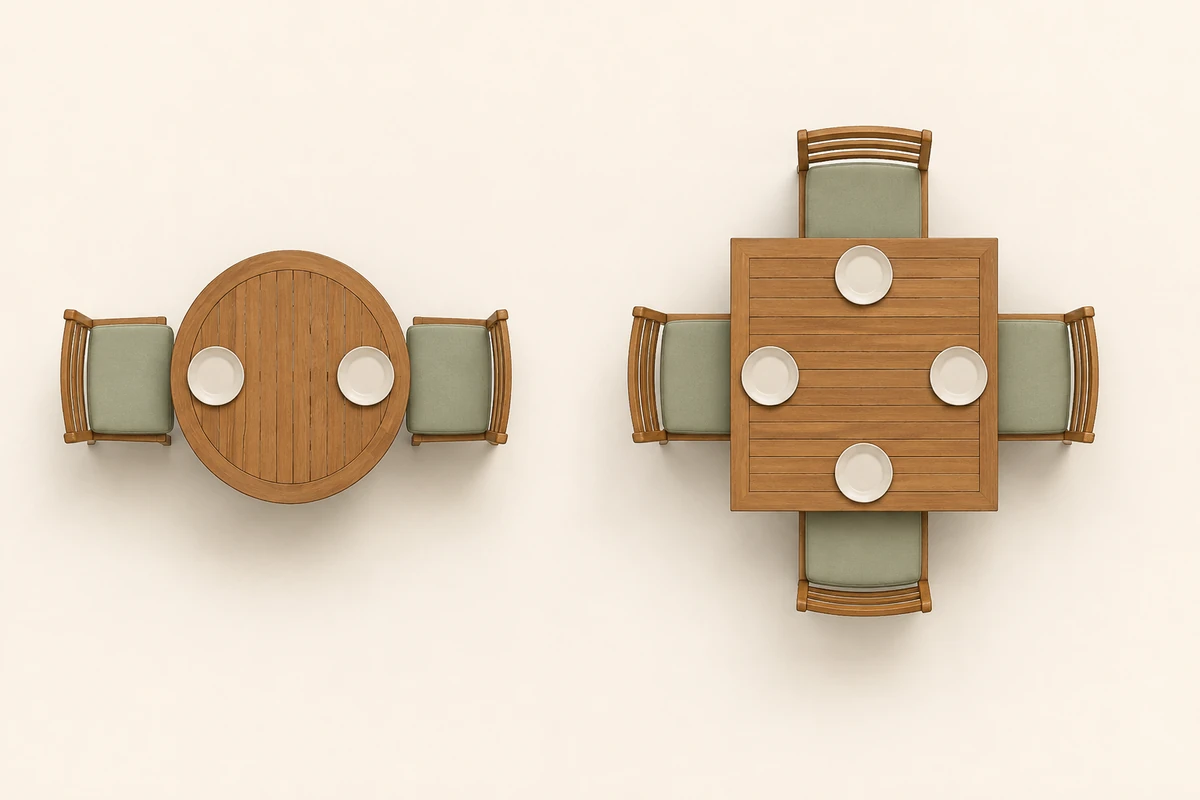
Outdoor table size guide: illustrative layouts for two and four people. AI-generated; not to scale.
Calculate Patio Clearance Before Choosing the Table
Measure from the edge of the tabletop to the nearest obstruction, including a wall, railing, planter or another piece of furniture. About 36 inches on each occupied side is a common estimated starting allowance for chairs and movement. It is not a promise of a clear walkway behind every seated person. Deep chairs, wide armchairs and busy routes can need more. Confirm chair comfort details in how to choose outdoor chairs.
Apply the outdoor table size guide to your patio using this calculation for both length and width:
Estimated dining zone = table dimension + allowance on one side + allowance on the opposite side.
For example, an illustrative 72 x 36-inch table with a 36-inch allowance on all four sides occupies a planned zone of 144 x 108 inches, or 12 x 9 feet. These are calculated dimensions for that assumed layout, not measurements of a Victory Relax product. If one side is a regular route from the house to the garden, increase its allowance and test it with a person sitting there.
A round table needs the same exercise in both directions. Do not use the tabletop diameter as the diameter of the whole dining area. Draw the chairs beyond it and check where people will stand when entering and leaving their seats.
Keep door swings and steps outside your planned chair area. A layout that works with a closed door may stop working the moment someone carries food outside. Also account for an umbrella base if you plan to use one; it can reduce usable foot space beneath the table.
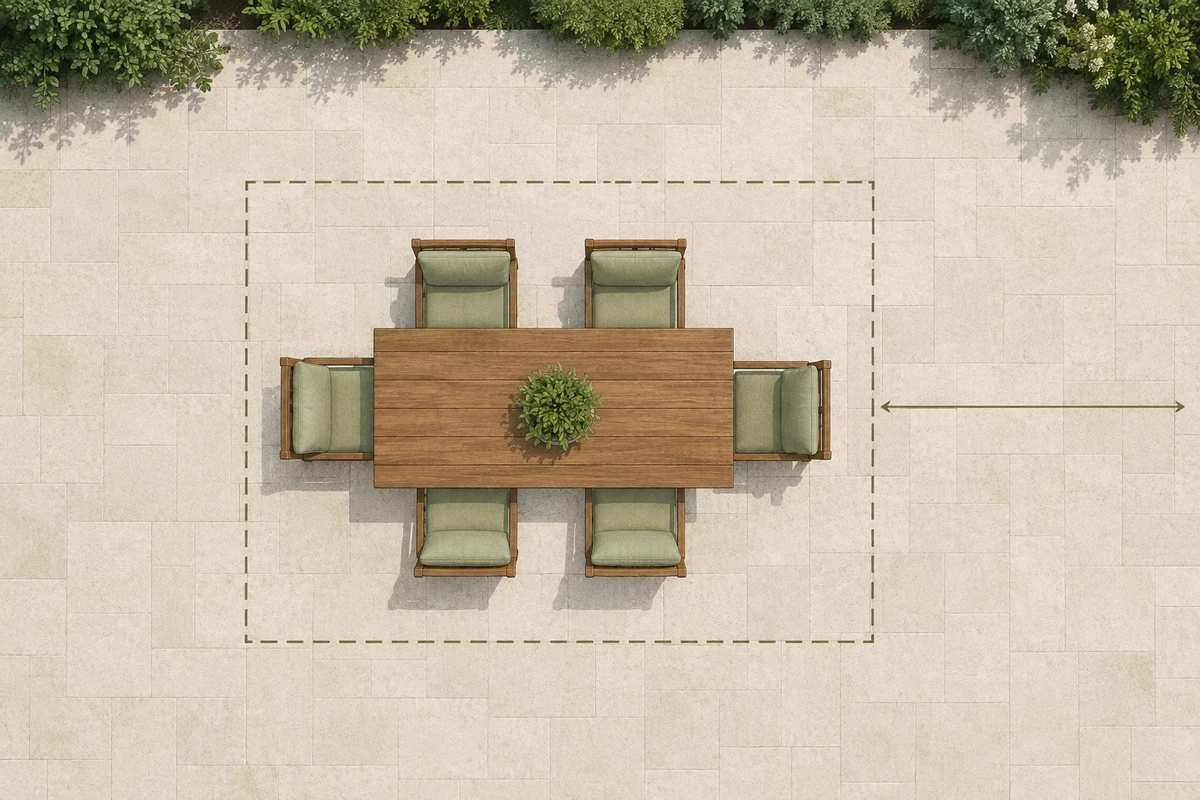
Plan the complete seating zone and a separate passing route where needed. AI-generated illustration; not to scale.
Match Table Shape and Height to Your Chairs
The most useful outdoor table size guide considers the furniture underneath the tabletop. Measure chair width at its widest point, including arms. Then compare that width with the gap between the table legs. A chair that cannot tuck in may take up considerably more floor space between meals. See how to choose outdoor chairs for seat height, arm height and comfort checks.
Round, square or rectangular?
An acacia wood round table can work well when you approach the seating from several directions. Its curved edge removes corners from the route, although a large round arrangement can still use substantial floor space. Square tables make it straightforward to give each diner a side. Rectangular tables often align naturally with long patios and allow you to separate dining from another activity at one end.
To compare shapes with this outdoor table size guide, mark two alternatives on the floor and use the same chairs with each. This makes the tradeoff visible: one layout may give you more tabletop while the other leaves a better route to the door. The better choice depends on how you move through the space every day.
Check the underside, not just the overall height
Dining tables commonly stand around 28-32 inches high, but overall height does not tell you how much room is underneath. An apron below the top can prevent chair arms from sliding in or reduce thigh clearance. Compare the chair seat and arms with the underside of the actual table. When possible, sit at the pairing before buying. For indoor pairings, see choose wood chair for dining table.
An outdoor coffee table is intended for a different relationship with seating. Its lower surface suits a lounge arrangement, so do not use dining-table dimensions to judge whether it will feel comfortable beside a sofa. Keep the activity clear before comparing sizes.
Test the Complete Outdoor Dining Layout
Put the outdoor table size guide into practice with this short layout test:
- Measure the usable floor area after allowing for doors, steps and fixed objects.
- Mark the tabletop with removable tape and position the chairs you expect to use.
- Sit down, pull each chair back and walk through the main route while the seats are occupied.
- Check a normal meal setup, including shared dishes, before committing to the size.
If the layout feels tight, change one thing at a time. Try a smaller top, a different orientation or narrower chairs, then repeat the test. Pushing the table against a wall may save space between meals, but it also changes which seats are usable. Plan for the position in which you actually dine.
Use the outdoor table size guide for both the everyday and fully extended positions of an extending table. For a folding table, also measure its storage footprint. Leave somewhere practical to keep spare chairs. A larger hosting arrangement is only useful if setting it up does not require blocking the entrance or moving furniture somewhere unsuitable.
Once the footprint works, compare construction, placement and maintenance. Our guide to acacia wood garden furniture offers broader context for choosing and caring for a wood outdoor setting. The size decision should still come from your own layout and the specifications of the table you select.
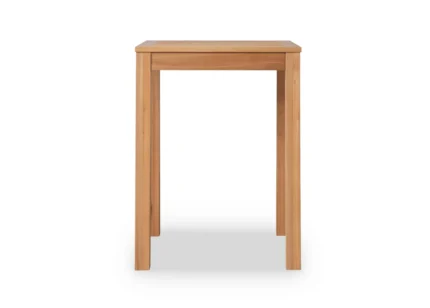
Compare compact bistro and folding round tables for dining, plus coffee and side tables for lounge seating. Match each table’s height and dimensions to its intended use and your layout; these are not six- or eight-seat dining recommendations.
Outdoor Tables for Dining and Lounging
-
Sale
-
Sale
 Outdoor
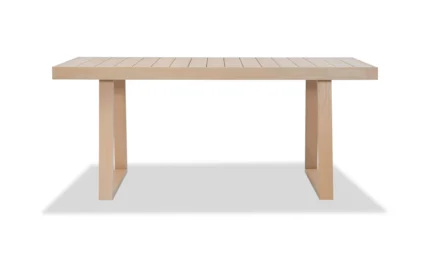
Solid Eucalyptus Wood Dining Table with Sled Legs
Original price was: $525.41. $367.79Current price is: $367.79.
-
Sale
 Outdoor
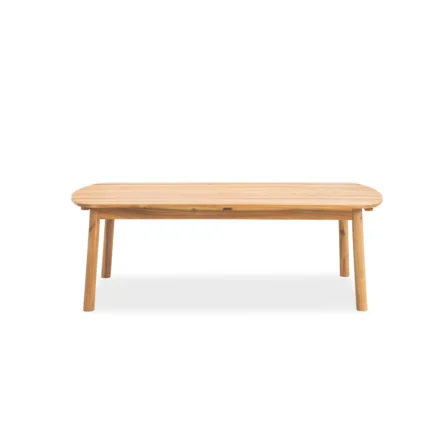
Solid Wood Oval Patio Coffee Table
Original price was: $182.36. $127.65Current price is: $127.65.
-
Sale
 Outdoor
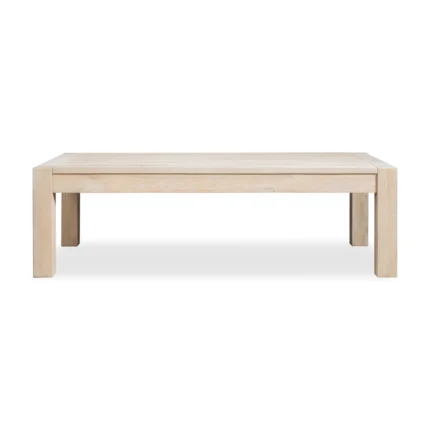
Brushed Finish Solid Eucalyptus Wood Patio Coffee Table
Original price was: $242.83. $169.98Current price is: $169.98.
Outdoor Table Size Guide: Frequently Asked Questions
What size outdoor table seats four people?
As an estimated starting point, compare round tops around 42-48 inches across or rectangular tops around 48-60 x 34-38 inches. Check the chairs and the manufacturer’s stated capacity. A compact arrangement for drinks may feel crowded during a full meal.
Can a 60-inch round table seat eight?
Do not assume eight comfortable seats from diameter alone. Chair width, the base and place settings determine whether the arrangement is practical. Test eight chairs and follow the specific table’s recommended capacity; a larger top may be a better fit for regular meals.
How much space should I leave around an outdoor table?
Begin with an estimated allowance of about 36 inches from the table edge on occupied sides, then check the actual chair movement. Add space where people need to pass behind seated diners. Confirm the full layout rather than treating one allowance as suitable for every patio.
Should I buy for everyday use or occasional guests?
Use the outdoor table size guide for the people who dine with you most often. Then test a separate hosting arrangement if you need extra places occasionally. Keeping an oversized table permanently can make a small patio less useful during the rest of the week.
Use this outdoor table size guide to make a shortlist, then let the tape-and-chair test make the final decision. Choose a size that supports your normal meals, leaves a workable route and pairs comfortably with your seating. With those measurements ready, explore the Victory Relax garden table range and compare the exact dimensions of each option.