
Wood vs metal outdoor chairs is best approached through the conditions at the chair, rather than a broad claim that one material suits an entire region. A sheltered terrace and a rain-exposed corner can sit at the same address yet create different care demands. Record the exposure before choosing a frame.
This guide is a climate checklist, separate from the narrower acacia or aluminum chairs comparison. It covers questions about sun, wet conditions, coastal exposure and seasonal storage. It does not assign unverified temperature differences, wind ratings or lifespans. Wood species, metal type, coating, hardware and seating materials all need to be identified on the actual product.
Wood vs Metal Outdoor Chairs: Describe Your Site First
Look at where the chair will stand throughout the day. Is it under a roof, in direct sun, near salt spray, beneath trees or beside a surface that holds water? Note whether you can move it before prolonged bad weather and whether cushions have a dry storage place.
Then separate the frame from the seat. A metal-frame chair may use fabric or cushions that determine much of its daily drying routine. A wooden slatted seat may have fewer separate textiles, but the frame and finish still need appropriate care. Do not classify a complete chair from the frame material alone.
For outdoor garden chairs, intended use and dimensions remain essential. Climate does not correct a poor sitting posture or a blocked door. Use how to choose outdoor chairs for those fundamentals, then apply this exposure checklist to the shortlisted products.
Keep the material comparisons specific: acacia or aluminum chairs separates metal-frame and timber-care questions, while acacia or teak chairs compares two wooden options. Neither comparison replaces checking the complete chair for your location.
Strong Sun: Compare Surfaces and Shade
In a sunny location, ask how the finish and seat materials are intended to be maintained. The USDA Forest Products Laboratory’s wood-finishing guidance identifies sunlight and water as factors in outdoor weathering. That broad principle does not establish a specific chair’s rate of colour change.
For metal, identify the alloy and coating rather than treating all metal as one surface. For both materials, try the chair under expected conditions where possible. Touch comfort depends on the actual surface and exposure; this guide does not promise that one frame will remain a fixed number of degrees cooler.
Plan shade or moveable seating where practical and permitted. If you add cushions, verify compatibility and account for their own care. Cushioned or bare chairs can help you compare that choice without assuming padding removes the effects of exposure.
A preferred colour and a preferred temperature feel are separate issues. Confirm whether maintaining the original appearance requires a particular product routine before buying a chair solely for its photograph colour.
Rain and Persistent Damp: Follow the Water
Check the ground and the chair’s drying opportunities. Feet left in pooled water, damp debris around joints and fabric that remains wet create care problems regardless of how attractive the frame looks. Ask how the product should be sheltered or stored during prolonged wet weather.
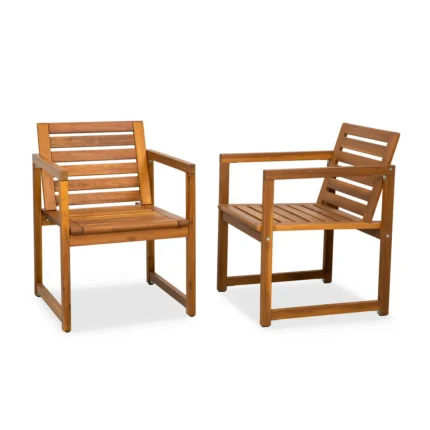
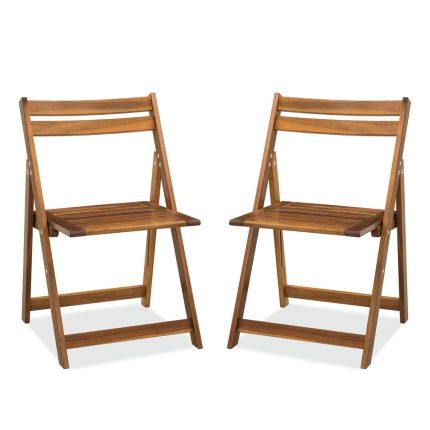
For an acacia example, the Naro acacia wood patio chairs listing recommends damp-cloth cleaning and protection from severe weather. The acacia wood folding chairs listing calls for drying before folding and dry covered storage during prolonged wet conditions. Those are product instructions, not a guarantee for every wooden chair.
Metal alternatives need instructions for the coating, connections and any fabric seat. A powder-coated aluminum frame is not equivalent to bare steel or stainless steel, and corrosion questions cannot be answered by the word metal alone. Ask about the actual materials, including hardware.
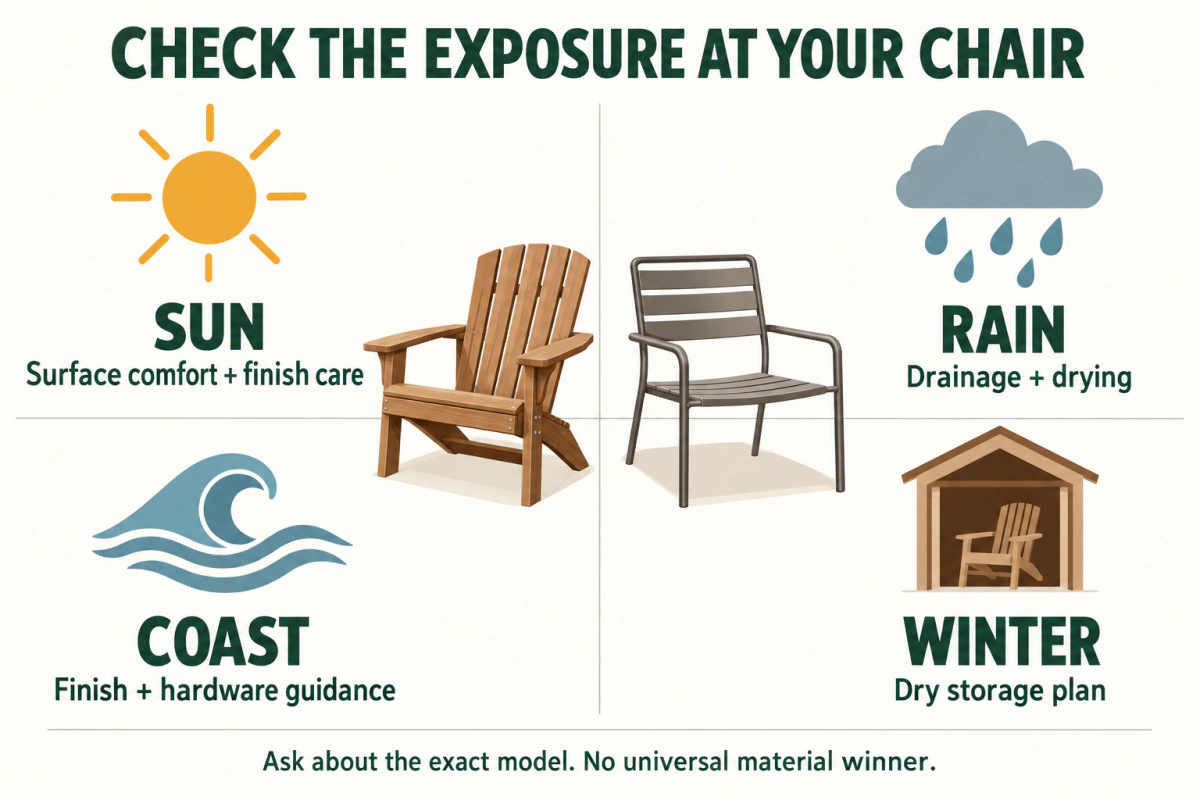
A schematic guide to the decisions discussed above. Illustrations are not exact product drawings; follow the selected model’s instructions.
| Exposure | Questions for either frame |
|---|---|
| Direct sun | How do the surface and seat feel, and what finish care is specified? |
| Persistent damp | Can the complete chair drain and dry, with feet out of pooled water? |
| Coastal conditions | What salt-exposure and hardware care does the supplier specify? |
| Seasonal non-use | Is there approved storage for the frame and fabric? |
Coastal Exposure and Winter Need Specific Guidance
When comparing wood vs metal outdoor chairs near the coast, ask each supplier about finish, fasteners and cleaning under salt exposure. Do not infer that all aluminum chairs are immune to deterioration or that a heavy wooden frame is automatically appropriate for an exposed balcony.
Wind suitability is a product-and-site question. Frame weight alone does not establish a safe arrangement, and this guide does not recommend improvised ballast or fastening to balcony components. Follow building rules and product guidance for exposed locations.
In cold or wet seasons, storage may be more important than a material argument. Confirm whether the frame folds, is explicitly stackable or needs its own footprint. Winter chair storage explains the preparation sequence, including drying the complete cushion rather than checking only its cover.
For a timber shortlist, assess acacia chairs outdoors at the actual site. If you use the seating through autumn, autumn porch seating offers practical ways to keep the arrangement accessible while adding seasonal textiles and decor.
Make a Shortlist You Can Maintain
Choose wood or metal seating after recording a realistic care routine for each exact model. Compare what must be wiped, dried, inspected, sheltered and stored. If one task is impractical in your home, another frame or seat format may suit you better.
For acacia wood outdoor furniture, choose the chair’s design and finish with those habits in mind. The guide to acacia chairs outdoors focuses on the wooden frame, slats and fabrics, while acacia or teak chairs offers a chair-specific wood comparison. Neither substitutes for supplier guidance on your exposed site.
Outdoor chair materials by climate is a way to organize questions, not a weatherproof ranking. A clear product specification and accessible storage plan provide a firmer basis for choosing than a material label used as a universal promise.
Explore the acacia chair examples
-
Out of StockSold Out
 Chair
Acacia Wood Patio Chairs Set of 2 – Modern Outdoor Armchairs
Price range: $100.72 through $114.30
-
Out of StockSold Out
Frequently Asked Questions
Which is best in every climate, wood or metal?
There is no universal winner. Compare the exact material, finish, hardware, seat construction and your ability to provide the required care.
Are all metal patio chairs aluminum?
No. Confirm the listed metal type and coating. Steel, aluminum and other constructions require different questions.
Does chair weight prove wind stability?
No. Weight alone does not establish a wind rating or suitability for an exposed site.
Should I choose by region or by my patio conditions?
Start with the actual location: shelter, sunlight, water, salt exposure and storage. Different spots in the same region can behave differently.
Related outdoor seating guides
Use wood vs metal outdoor chairs as a site checklist. Describe the exposure, identify every material in the chair and compare the care you can actually provide. A model with clear instructions, suitable dimensions and a workable storage routine is a more practical choice than an unsupported claim that wood or metal always wins in your climate.