
If you want to know how to protect acacia wood outdoor furniture, start with a simple rule: protect the finish that is already on the furniture instead of automatically adding a new product. Keep the surface clean and dry, limit unnecessary exposure to standing water and intense weather, provide airflow around covers, and use only a protective treatment that is compatible with the existing finish and the manufacturer’s care instructions.
Acacia is widely used for outdoor furniture, but proper care still matters. The right routine for how to protect acacia wood outdoor furniture depends on the furniture’s current condition, finish, exposure, and the instructions supplied with the exact product. A piece on a covered patio may need different attention from one exposed to regular rain, direct sun, dirt, or seasonal storage.
This guide focuses on practical protection rather than on whether acacia belongs outdoors in the first place. For that broader question, see the topic covered by Is Acacia Wood Good for Outdoor Furniture?. Here, the goal is to help you inspect, clean, protect, cover, and store your furniture without applying unnecessary treatments.
How to Protect Acacia Wood Outdoor Furniture Step by Step
The safest approach is condition-based rather than calendar-based. Before cleaning or applying anything, inspect the furniture and identify what it actually needs.
- Inspect the surface. Look for dirt buildup, stains, rough areas, worn finish, trapped moisture, loose hardware, or other visible changes.
- Check the care instructions. Follow the exact manufacturer’s directions for cleaning products, finishes, oils, sealers, and storage.
- Clean gently. Remove loose debris and surface dirt without aggressive scrubbing or harsh chemicals unless the manufacturer specifically allows them.
- Let the furniture dry completely. Do not trap moisture under a cover or apply a protective treatment to a surface that is still damp.
- Identify the existing finish. Before adding oil, sealer, or another coating, confirm what is already on the wood and whether the proposed treatment is compatible.
- Reduce unnecessary exposure. When practical, use shade, covered placement, sensible positioning, and breathable protection during severe or prolonged weather.
- Store appropriately when needed. For long periods of non-use, clean and dry the furniture first, then choose a dry, ventilated storage setup that follows the manufacturer’s recommendations.
This sequence avoids a common mistake: treating every piece of acacia furniture the same way. Followed in order, these steps cover how to protect acacia wood outdoor furniture without over-treating any single piece, since different products can arrive with different factory finishes and no single oiling or sealing routine applies universally.
Inspect the Furniture Before You Clean or Treat It
A quick inspection tells you whether the furniture needs simple cleaning, better weather protection, finish maintenance, or professional attention.
Start with the top surfaces, joints, edges, legs, and areas that stay shaded or close to the ground. Check whether dirt or moisture collects in particular spots. If the furniture folds, extends, or has movable parts, inspect those areas as well.
Also look at the finish itself. A surface that is simply dusty does not need the same response as one that appears worn or uneven. If you cannot determine what finish was originally used, avoid guessing. Check the product documentation or contact the manufacturer before applying a new coating.
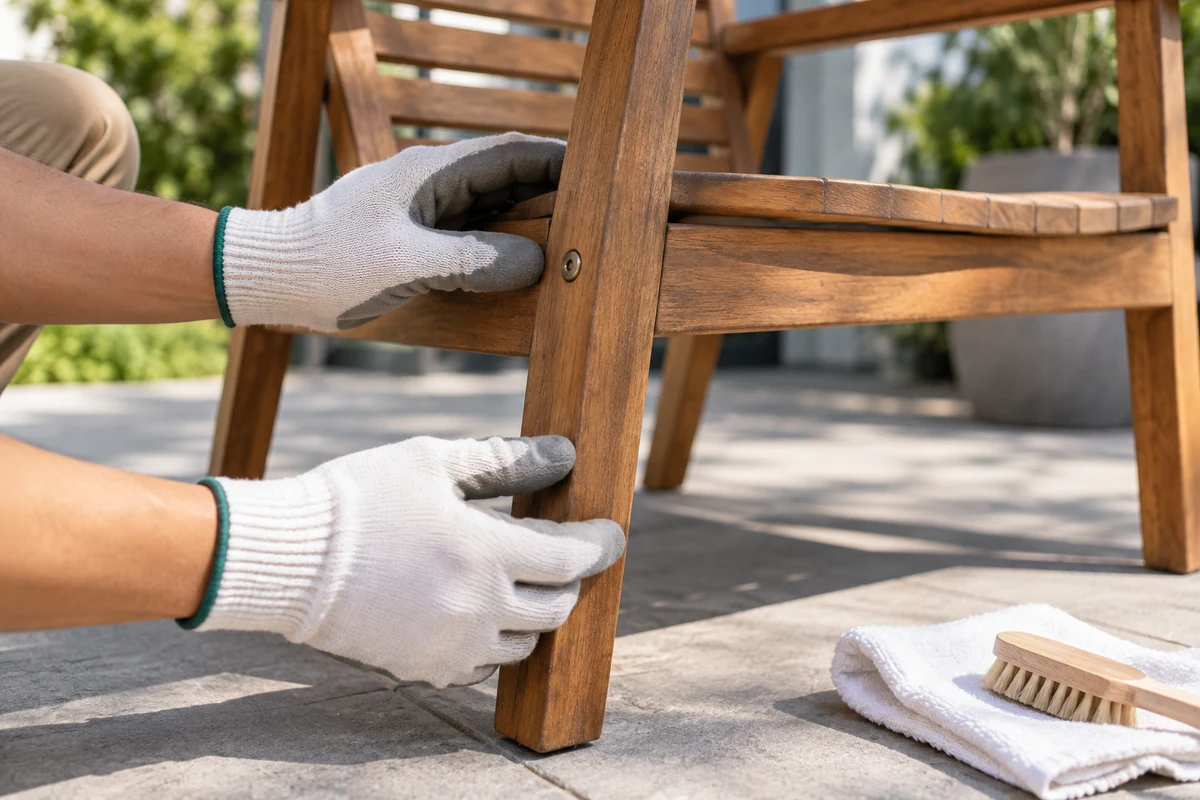
Inspect joints, edges and shaded areas for dirt, moisture or worn finish before cleaning or treating.
Clean Acacia Outdoor Furniture Gently
Regular surface cleaning can prevent dirt, organic debris, food residue, and other contaminants from remaining on the furniture longer than necessary. The goal is to clean the surface without stripping or damaging its finish.
Begin by removing loose dust and debris with a soft cloth or brush suitable for the surface. For routine washing, use the cleaning method recommended by the furniture manufacturer. If mild soap and water are permitted, work gently rather than soaking the wood.
Avoid assuming that stronger cleaners will produce a better result. Abrasive tools, aggressive chemicals, and unnecessary pressure can affect a finish or change the appearance of the surface. When trying a new cleaning method that the manufacturer allows, testing it on a small, inconspicuous area first can help reveal unwanted changes before you treat the entire piece.
Pay attention to joints and low points where water can remain after cleaning. Once the surface is clean, remove excess moisture and allow the furniture to dry thoroughly — careful cleaning and full drying are the foundation of how to protect acacia wood outdoor furniture over time.
Let the Wood Dry Completely Before the Next Step
Drying is an important part of how to protect acacia wood outdoor furniture. Cleaning and protection should not become one rushed step.
After washing, give the furniture enough ventilation to dry throughout the areas you cleaned. Do not immediately close it inside a tight cover, stack damp pieces together, or apply a treatment over a damp surface.
The exact drying time varies with weather, airflow, construction, and how wet the furniture became, so use the condition of the piece rather than a fixed number of hours. If moisture is still visible or the surface still feels damp, wait.
Identify the Existing Finish Before Choosing a Treatment
This is the point where care advice often becomes too general. A recommendation to “oil acacia furniture regularly” may be inappropriate if the product has a finish that requires a different care method.
Before using oil, sealer, stain, or another protective coating, determine what is already on the furniture. Product manuals, care labels, retailer documentation, and manufacturer support are better sources than assumptions based only on the wood species.
If the manufacturer recommends a specific maintenance product or application method, follow those directions. If the manufacturer warns against certain coatings or cleaners, respect those limits. Mixing incompatible finishes can create an uneven appearance or make later maintenance more difficult.
If the existing finish is unknown and the surface needs more than routine cleaning, it is better to pause and identify the finish than to add another product blindly.
Reduce Rain and UV Exposure Where Practical
Protection is not only about what you put on the wood. Placement can reduce the amount of weather the furniture has to handle.
If your space allows it, position acacia wood outdoor furniture where it receives some protection from prolonged rain and the harshest direct exposure. A covered patio, porch, pergola, or another sheltered location can reduce unnecessary weathering without changing how the furniture is used.
That does not mean the furniture must always stay indoors. The practical goal is to avoid preventable exposure when a more protected location is available.
Also consider how water drains around the furniture. Avoid arrangements where legs or lower components sit in persistent puddles or where nearby objects keep wet debris pressed against the wood.
Use Outdoor Furniture Covers Without Trapping Moisture
A cover can be useful during periods of bad weather or non-use, but ventilation still matters. A cover that traps damp air against the furniture can work against the purpose of covering it.
Use a cover that is appropriate for outdoor furniture and follow its instructions. Make sure the furniture is reasonably clean and fully dry before covering it for an extended period. Where the cover design allows it, maintain airflow rather than sealing damp furniture into a closed environment. Allowing airflow is a simple but often-missed part of how to protect acacia wood outdoor furniture under covers.
After severe weather, check beneath the cover instead of assuming everything remained dry. If moisture has entered, uncover the furniture and allow it to dry before covering it again.
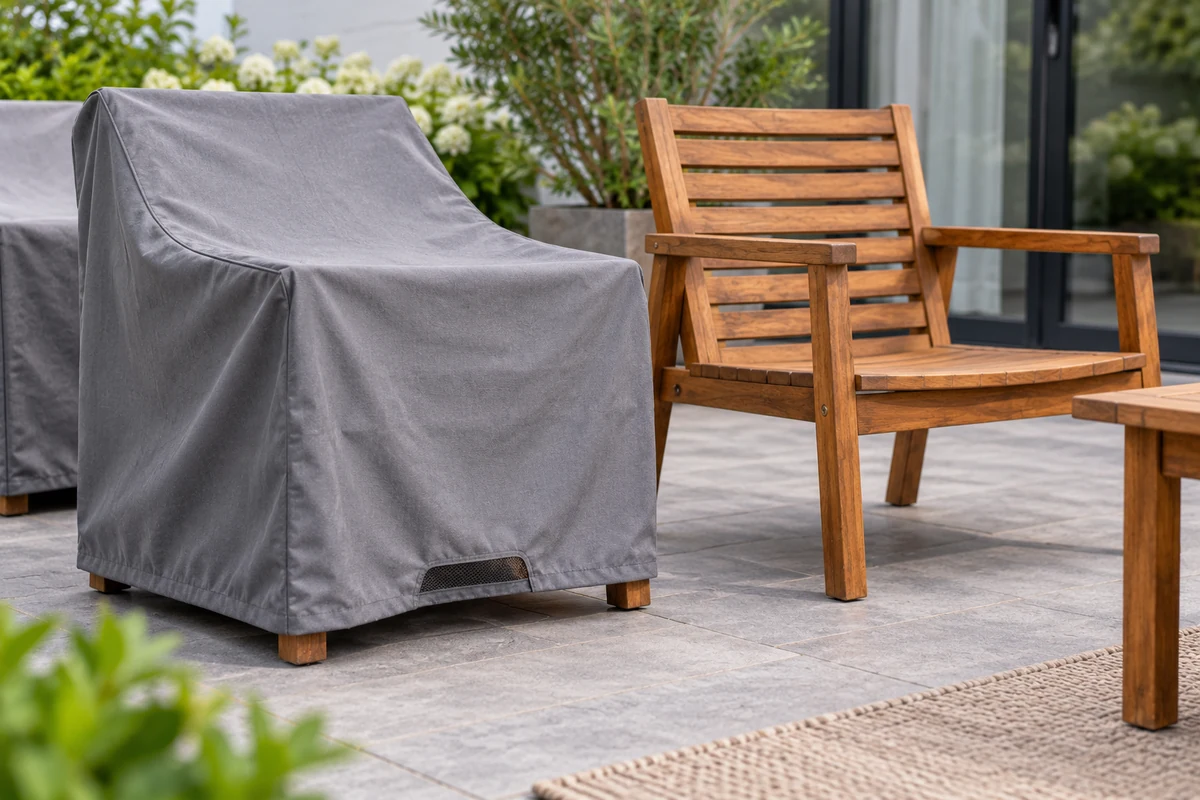
Use a breathable, correctly fitted cover on dry furniture and keep airflow so moisture is not trapped.
Protect Acacia Furniture During Winter or Long-Term Storage
Seasonal care depends on your climate, storage options, and the manufacturer’s guidance. There is no universal calendar date for how to protect acacia wood outdoor furniture in winter that fits every piece, and no rule that every acacia item must be moved indoors.
For extended storage, prepare the furniture rather than simply putting it away. Clean off dirt and debris, let every piece dry completely, and inspect the finish and hardware. If the product folds or disassembles, follow the manufacturer’s instructions rather than forcing components into a more compact position.
Choose a storage location that stays dry and has reasonable ventilation. Avoid putting damp furniture directly into a tightly enclosed space. If indoor storage is not available, use the most protected outdoor arrangement available to you and check the furniture periodically for trapped moisture or cover problems.
Use a Condition-Based Maintenance Routine
A fixed schedule such as “oil every few months” sounds convenient, but it ignores differences in finishes, climates, exposure, and use. There is no single schedule for how to protect acacia wood outdoor furniture — a better routine responds to the actual condition of the furniture.
- Inspect after periods of heavy use or difficult weather.
- Clean when dirt or residue builds up rather than allowing it to remain on the surface.
- Check whether water is collecting around joints, covers, or furniture feet.
- Review the finish when it appears worn or changed, then consult the manufacturer’s maintenance directions.
- Before long storage, clean, dry, and inspect the furniture again.
This approach keeps maintenance proportional to what the furniture actually needs. It also reduces the chance of over-treating a surface simply because a calendar reminder says it is time.
For readers comparing pieces or planning a larger patio setup, the broader acacia wood garden furniture guide covers different outdoor furniture types and use cases.
Recommended for you
-
New

-
New
-
New
-
New
-
New
-
New
-
New
-
New
Common Protection Mistakes to Avoid
One of the biggest mistakes is applying a finish without knowing what is already on the wood. Another is covering furniture while it is still damp. Both can turn a simple maintenance task into a more complicated surface problem.
It is also worth avoiding aggressive cleaning by default. If ordinary dirt can be removed with the manufacturer’s recommended gentle method, there is no benefit in escalating immediately to harsher chemicals or abrasive tools.
Finally, do not treat general advice as a replacement for the care instructions supplied with your particular furniture. The construction and finish of one product may differ from another even when both are made from acacia.
When Should You Recheck the Furniture?
Recheck it when conditions change: after extended wet weather, after moving it to a more exposed location, before and after seasonal storage, or when the finish visibly changes. That is more useful than following an arbitrary maintenance interval.
If the furniture looks clean, dry, stable, and the finish remains in good condition, protection may simply mean continuing sensible placement and routine cleaning. If the finish appears worn, the next step is to identify the approved maintenance method for that product before applying anything.
Frequently Asked Questions
What is the best way to protect acacia wood outdoor furniture?
In short, how to protect acacia wood outdoor furniture comes down to five habits: keep it clean, let it dry fully after cleaning or rain, reduce unnecessary weather exposure, use breathable protection when appropriate, and maintain the existing finish according to the furniture manufacturer’s instructions.
Should I put teak oil on acacia outdoor furniture?
Not automatically. Acacia furniture can have different factory finishes and care requirements. Check the manufacturer’s instructions and confirm that any oil or treatment is compatible with the existing finish before applying it.
Should acacia furniture be covered when it rains?
A suitable outdoor cover can reduce exposure, especially during prolonged bad weather, but the furniture should be dry before extended covering and the setup should not trap moisture. Follow the cover and furniture manufacturers’ instructions.
How often should I treat acacia outdoor furniture?
Use the condition of the furniture and the manufacturer’s guidance rather than a universal schedule. Inspect the finish periodically and after significant weather exposure, then maintain it only with an approved compatible treatment when needed.
Can I leave acacia furniture outside during winter?
The right choice depends on the product, climate, exposure, and manufacturer guidance. If storing it for a long period, clean and dry it first and use a dry, ventilated, protected location whenever practical.
Protect the Furniture You Have, Not a Generic Piece of Acacia
Knowing how to protect acacia wood outdoor furniture is less about following a universal oiling schedule and more about making careful decisions based on the actual piece in front of you. Inspect it, clean it gently, let it dry, identify its finish, reduce avoidable weather exposure, and use compatible protection only when the product’s care instructions support it.
Start with an inspection today — the lowest-effort first step in how to protect acacia wood outdoor furniture. If the furniture is clean, dry, and in good condition, focus on sensible placement and moisture control. If the finish needs attention, confirm the manufacturer’s approved care method before applying a new treatment.