
Choosing between acacia vs teak outdoor furniture is less about finding a universal winner and more about matching a material to your exposure, care routine and budget. Both are real woods used for acacia wood outdoor furniture and teak patio pieces, yet they differ in how they weather, what maintenance they expect and how their supply chains work.
This comparison keeps the focus practical. Instead of declaring one wood better in every case, it walks through durability, weather resistance, maintenance, price, sustainability and appearance, then helps you decide which suits a covered patio, an open garden or a busy family space.
Acacia vs Teak Outdoor Furniture at a Glance
The table below summarizes how acacia vs teak outdoor furniture usually compares across the factors buyers ask about most. Details vary by species, product construction and finish, so treat this as orientation and verify the exact product before buying.
| Factor | Acacia | Teak |
|---|---|---|
| Weather resistance | Performs outdoors when designed for exterior use, finished appropriately and cared for; vulnerable to prolonged standing moisture | Generally regarded as highly resistant to moisture and insects; still benefits from care in severe exposure |
| Durability over time | Durable with inspection, drainage and finish maintenance; lifespan depends strongly on exposure and care | Known for long service life outdoors; construction and exposure still matter |
| Maintenance | Clean gently, dry fully, identify the existing finish before treating, cover or store as instructed | Clean periodically; oiling is optional and changes appearance — follow the manufacturer’s guidance |
| Price positioning | Compare exact products at current retail; acacia pieces are commonly found across accessible price ranges | Compare exact products at current retail; teak pieces are commonly positioned higher — verify before deciding |
| Sustainability sourcing | Ask the seller about species, origin and any chain-of-custody documentation for the exact product | Ask the seller about species, origin and any chain-of-custody documentation for the exact product |
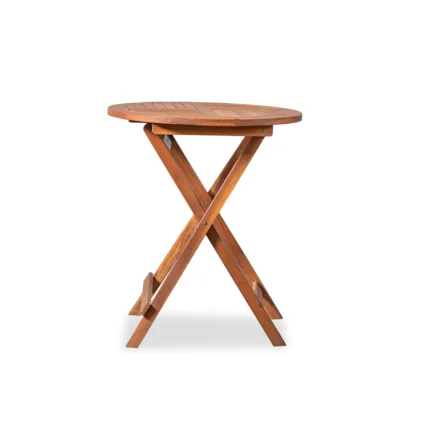
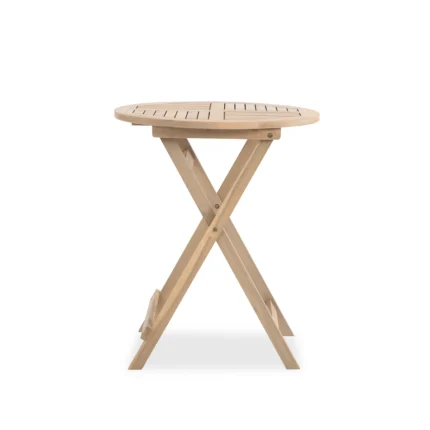
| Appearance | Warm varied grain; finish and colour change with sun and weather unless maintained | Honey-brown when new, weathering toward silvery grey if left untreated |
Durability and Weather Resistance Compared
Durability is the first lens for acacia vs teak outdoor furniture. Sun, rain, humidity and off-season cold all act on wood and its finish, and the product’s construction — joinery, hardware, drainage — matters as much as the species name.
Acacia works outdoors when the piece is explicitly intended for exterior use, water can drain rather than collect, and the owner inspects and maintains the finish. Teak has a stronger general reputation for resisting moisture and decay, which is why it appears in marine and high-exposure settings. Even so, a well-designed acacia set in a covered patio can outlast a poorly constructed teak piece left in standing water.
Maintenance: What Each Wood Expects From You
Maintenance is where the two woods diverge most in daily life. Acacia asks for a condition-based routine: clean gently with manufacturer-approved methods, let the furniture dry fully, identify the existing finish before adding any oil or sealer, and use breathable covers or dry storage when conditions require it.
Teak maintenance is usually lighter but not zero. Routine cleaning keeps the surface sound, while oiling is a cosmetic choice that deepens colour rather than a structural requirement — and incompatible treatments can complicate later care. For either wood, applying an unknown product over an existing finish without checking compatibility is a common mistake.
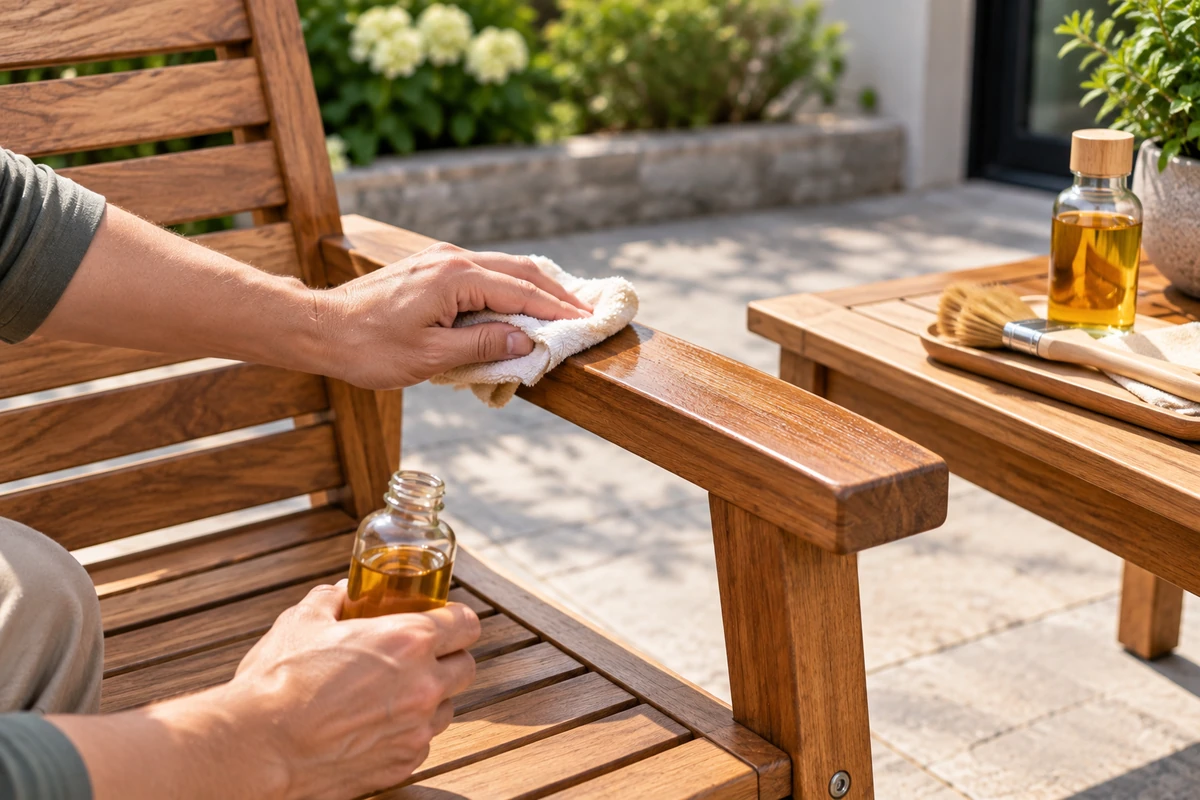
Maintain the existing finish with compatible products: clean gently, confirm the finish type, then treat only as instructed.
Price and Value: How to Compare Fairly
Price comparisons only make sense between exact products at current retail. As a rough orientation, acacia outdoor pieces commonly appear across accessible price ranges, while teak pieces are commonly positioned higher — but ranges overlap, sales change the picture, and construction differences can outweigh material differences.
To judge value in acacia vs teak outdoor furniture, weigh the purchase price against expected lifespan in your exposure, the maintenance you will realistically do, and replacement or part availability. A lower-priced set that needs early replacement can cost more over time than a well-kept set bought once.
Sustainability and Sourcing Questions to Ask
Sustainability claims should always trace to the exact product, not the species in general. For either side of acacia vs teak outdoor furniture, ask the seller which species is used, where the timber originates, and whether any chain-of-custody or certification documentation covers that item. Vague wording without documentation deserves skepticism however familiar the wood name sounds.
Also consider lifespan as a sustainability factor. Furniture that is repaired, refinished and kept in use avoids replacement cycles regardless of species, so favour designs with accessible joinery, replaceable parts and clear care instructions.
Which Should You Choose for Your Space?
Choose acacia when you want natural wood character across dining, seating or lounge formats, accept a hands-on care routine, and prefer comparing widely available acacia wood outdoor furniture options at accessible price points. It suits covered patios especially well and open settings when you will clean, dry, cover or store pieces as instructed.
Choose teak when your setting is severely exposed, you want the most forgiving weathering behaviour, and the higher positioning fits your budget. Even then, verify the exact product’s construction and care guidance rather than buying on reputation alone.
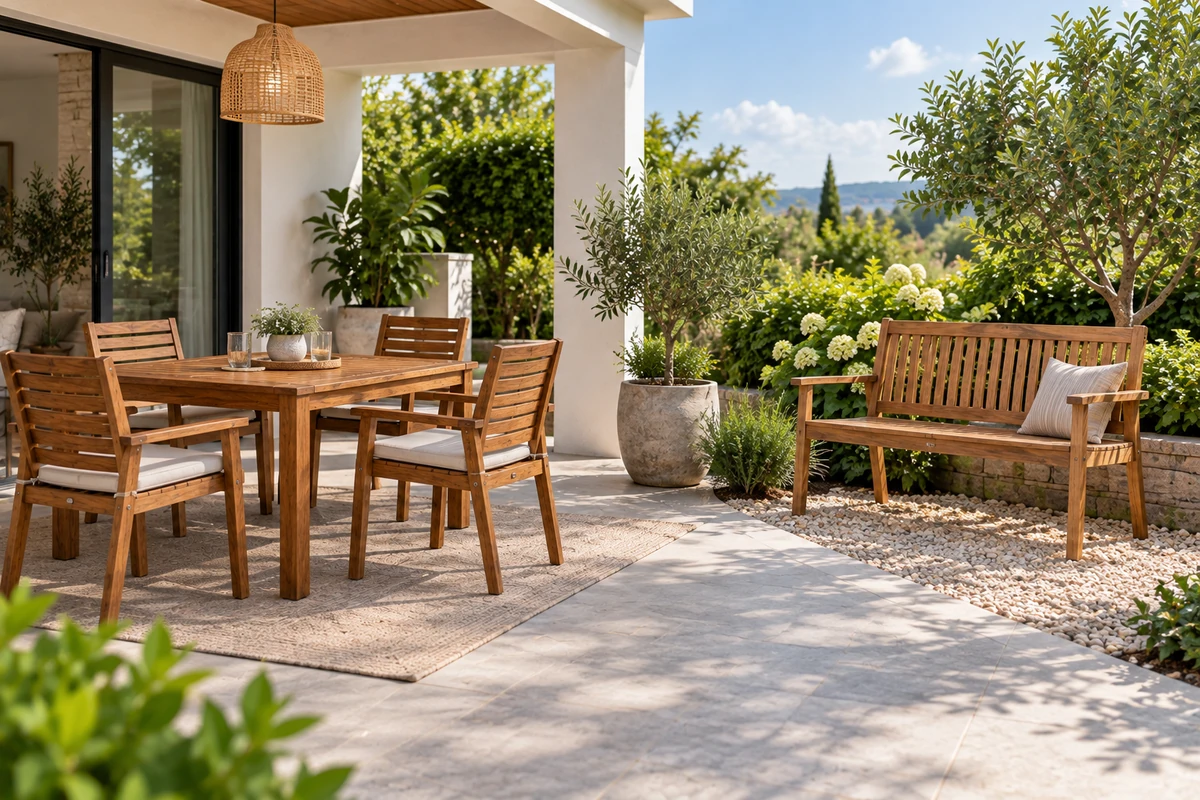
Match the wood to the placement: covered dining zones suit acacia care routines, while severely exposed corners favour teak.
Recommended for you
-
New

-
New
-
New
-
New
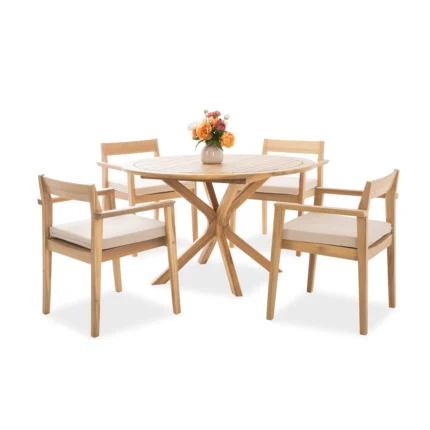
-
New
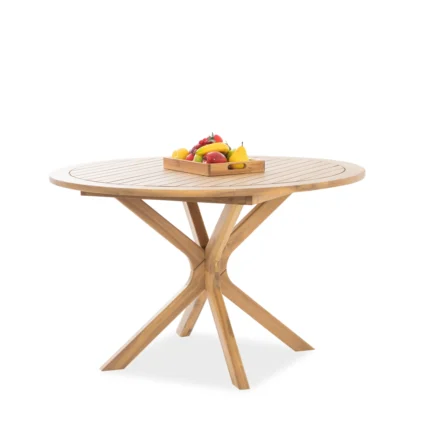
-
New
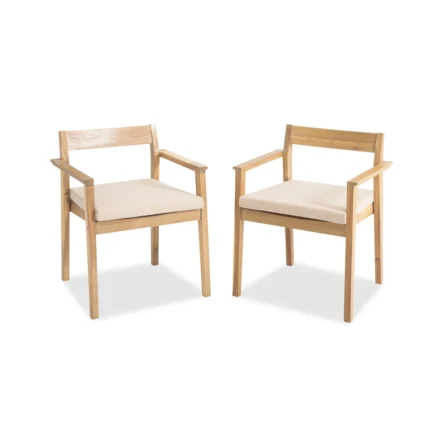
-
New
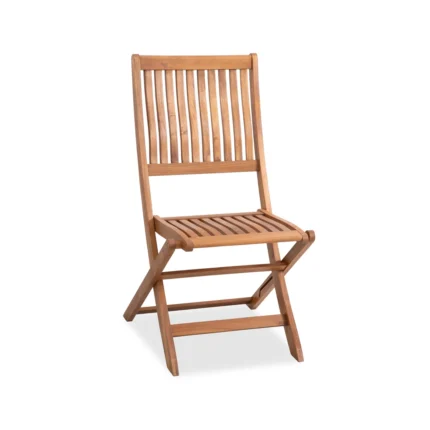
-
New
Frequently Asked Questions
Which lasts longer outdoors, acacia or teak?
Teak has the stronger general reputation for long outdoor service life, but actual lifespan in acacia vs teak outdoor furniture depends on product construction, finish, exposure and care. A well-made, well-kept acacia piece can outlast a neglected teak one.
Does teak outdoor furniture need oiling?
Usually not for structural reasons. Oiling teak mainly affects colour and appearance, and some manufacturers advise against certain treatments. Follow the care instructions for the exact product.
Does acacia outdoor furniture need a cover?
A suitable breathable cover helps during prolonged bad weather or non-use, provided the furniture is dry before extended covering and airflow is maintained. The same moisture-trapping caution applies to teak.
Which is more sustainable, acacia or teak?
Neither species is automatically sustainable. Ask for species, origin and chain-of-custody documentation for the exact item, and favour furniture designed for repair and long use.
Which costs less, acacia or teak outdoor furniture?
Compare the exact products at current retail rather than relying on general rules. Teak pieces are commonly positioned higher, but construction, size and sales can change any individual comparison.
Verdict: Acacia vs Teak Outdoor Furniture
Acacia vs teak outdoor furniture is not a contest with one right answer. Teak offers the most forgiving weathering behaviour and the longest reputation outdoors; acacia offers warm natural-wood character with a hands-on but manageable care routine. Match the wood to your exposure, the maintenance you will actually do, and the exact product’s construction — and the better choice for your patio becomes clear.