
Acacia vs teak outdoor chairs is most useful as a comparison of actual seats, rather than a contest between wood names. A chair must support your intended posture, fit the table or conversation area and match the care you are prepared to provide. The species label does not tell you its seat height, comfort or construction quality.
This guide takes the chair-specific view: arm support, slats, fabric, moving joints and the cost of a complete seating arrangement. For the broader material discussion, see acacia vs teak outdoor furniture. The VictoryRelax examples below are acacia listings; they are not a matched performance test against a teak chair.
Acacia vs Teak Outdoor Chairs: Start With Like-for-Like Seats
Compare dining chairs with dining chairs and lounge seats with lounge seats. A low, reclined acacia chair and a tall, upright teak dining chair do not offer the same sitting experience, whatever their timber. Ask for actual seat height, depth, arm height and overall dimensions before judging which is a better purchase.
Teak is associated with outdoor furniture and can weather to a silver-grey appearance if left untreated; manufacturers offer different care routes depending on the desired finish. Acacia products also vary in finish and construction. Use the care instructions for the specific chair instead of transferring a teak treatment routine to a coated acacia surface.
A useful comparison of acacia and teak chairs records the design and the finish separately. One tells you how you sit; the other affects the maintenance and appearance you can expect. Neither replaces information about assembly, hardware and the surface on which the chair will stand.
Use the outdoor chair buying guide to establish posture, seat size and arm clearance before comparing the two woods. If you are assessing acacia chairs outdoors for the first time, check the complete seat and its exposure instructions rather than judging timber appearance alone.
Compare the Parts You Touch and Move
Look closely at the front seat edge, armrests and backrest rather than only the wood grain. These contact points influence how the chair feels. A broad arm can be welcome for reading but may prevent the chair tucking under a dining table. Back slats and fabric panels create different support, so try the chair where possible.
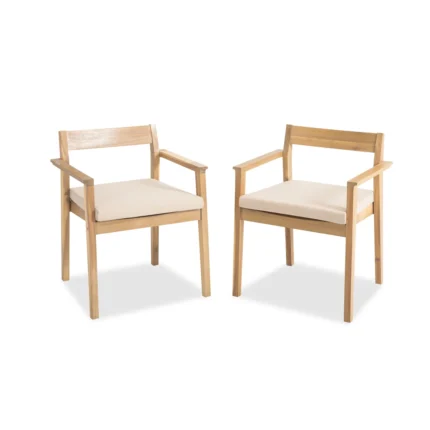
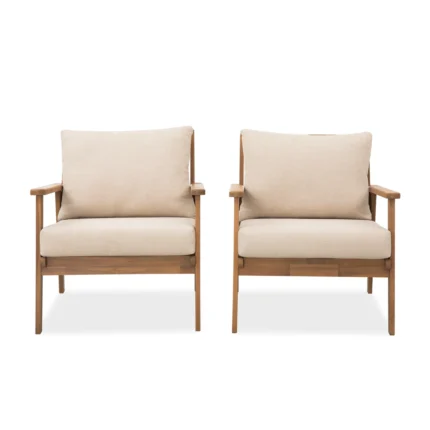
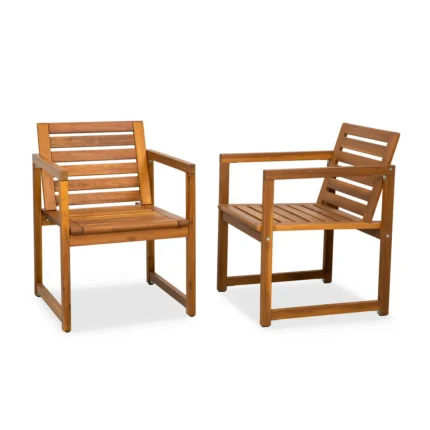
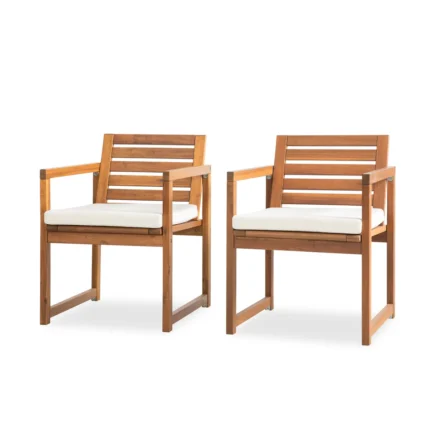
For an actual acacia example, the Naro acacia wood patio chairs listing includes two armchairs, each 22 × 24 × 30 inches overall. It specifies long armrests and a 105-degree backrest angle. These are listing details for that design, not qualities shared by every acacia seat.
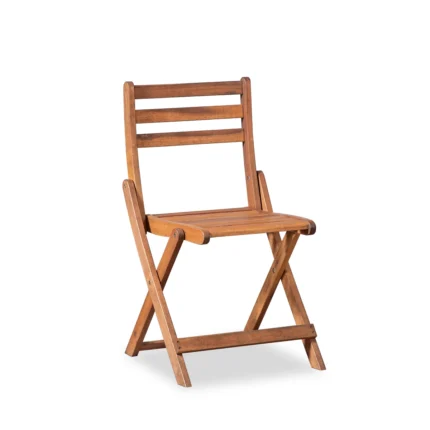
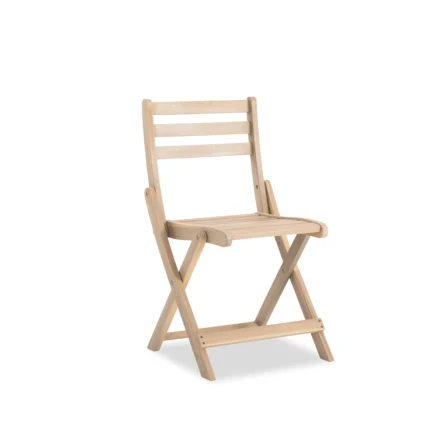
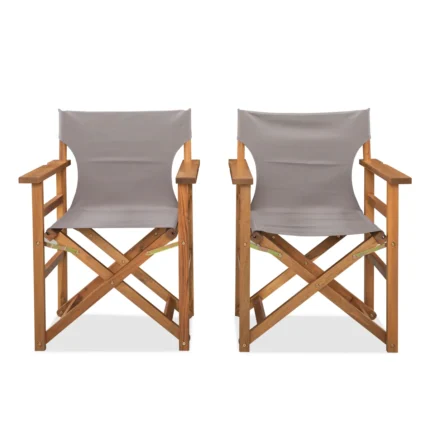
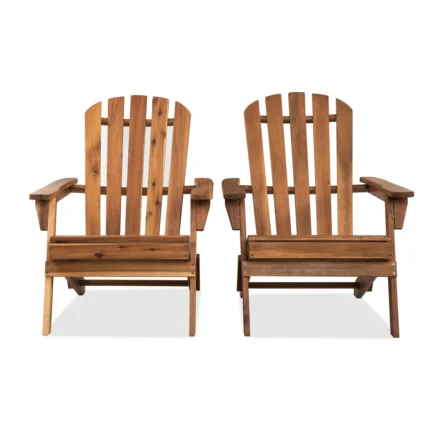
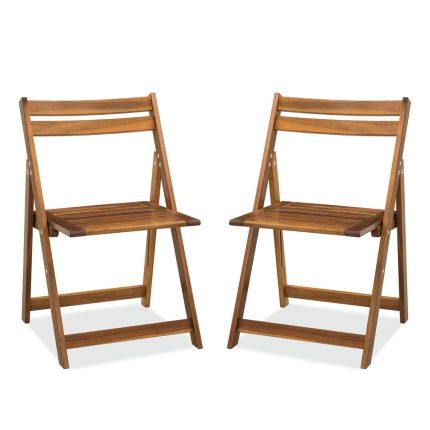
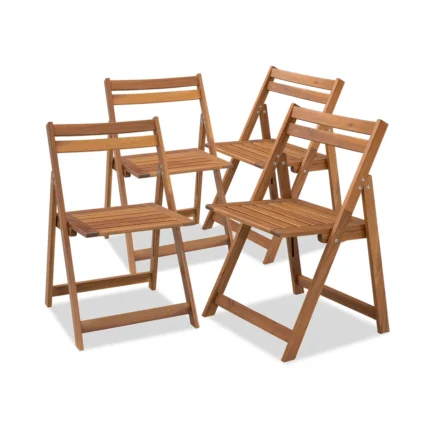
The acacia wood folding chairs listing instead describes a slatted folding format, 19.0 × 19.7 × 31.7 inches per chair, offered in sets of two or four. The smaller open dimensions and folding mechanism answer a different need from the Naro pair. A teak alternative should be checked against the same intended use, not simply the same photograph style.
Separate Colour Expectations From Care
Ask whether you want to preserve a warmer original colour or accept a changing outdoor appearance. That preference can affect the finishing routine. Natural colour change is not, by itself, a measurement of structural condition: inspect joints, legs and seat components independently.
Avoid a fixed promise that either wood needs oil on a universal schedule. Some surfaces are intended for particular cleaners, protectors or finishing systems. Applying another product can change the appearance or interfere with the existing finish. Confirm compatibility and the preparation instructions before treating an entire chair.
| Question | What to compare |
|---|---|
| Will the chair suit meals? | Seat height, posture, table apron and arm clearance |
| Will it stay outdoors? | Product instructions, shelter, drainage and a storage plan |
| Do I want the original colour? | Approved finish-care route for each model |
| Will I move it often? | Verified weight, handling and folding instructions |
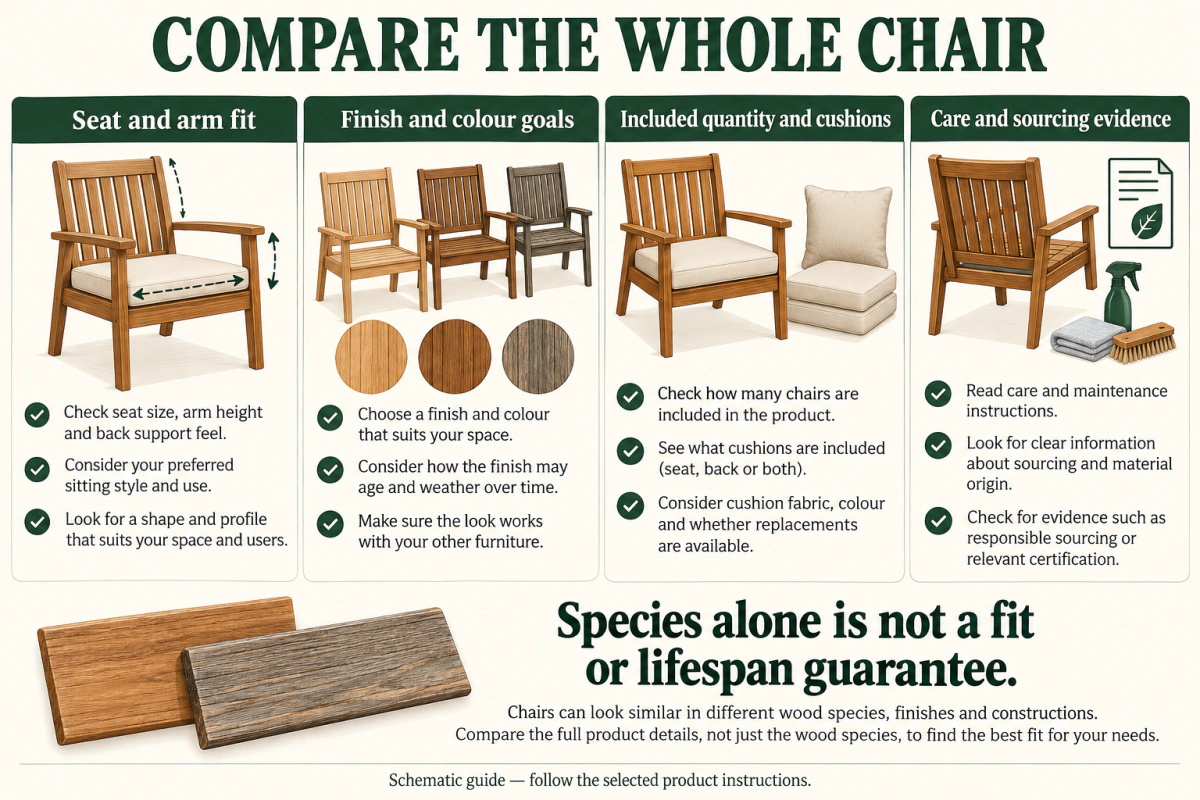
A schematic guide to the decisions discussed above. Illustrations are not exact product drawings; follow the selected model’s instructions.
Compare the Complete Purchase, Not a Wood Price Claim
For acacia vs teak outdoor chairs, compare the same number of seats and the same included items. A two-chair listing with optional cushions cannot be fairly compared with a single chair that includes padding. Add any required covers, separate cushions and delivery or assembly charges using current quotes.
No fixed price difference or lifespan is assumed here. Grade, design, finish and seller terms can change the comparison. A more expensive chair may solve a need you value, but the timber name alone does not establish a better fit for your patio.
Sourcing information needs the same care. Request documentation for any certification or origin claim instead of treating either species as automatically sustainable. No certification is implied for the products discussed in this article.
If a metal frame is also on your shortlist, compare acacia or aluminum chairs as a separate product decision. It helps distinguish finish-care tasks from the differences between two wooden seating designs.
Which Chair Should You Shortlist?
Shortlist an acacia design if its dimensions, construction and stated care routine suit your use. Shortlist a teak design on the same basis, with clear expectations about the finish and weathered appearance. Compare available product information side by side before deciding which tradeoffs matter.
The guide on how to choose outdoor chairs provides the chair-side checks. If space is the main constraint, chairs for small patios offers a narrower selection by use case. For aftercare, acacia chair care keeps the focus on the selected frame and finish rather than a species-wide recipe.
Ultimately, choosing acacia or teak chairs is a decision about a product you can actually use. A clear specification and manageable care plan are more valuable than an unverified claim that one wood always wins.
Explore the acacia chair examples
-
Sale
 Outdoor
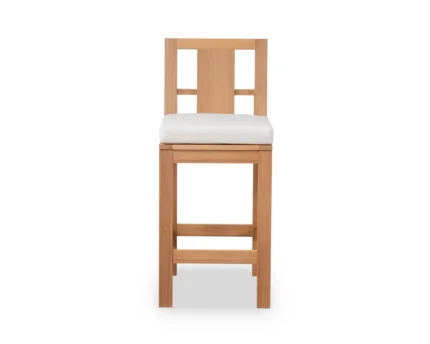
Eucalyptus Wood Outdoor Bar Stool
Original price was: $359.00. $258.49Current price is: $258.49.
-
Sale
 Chair
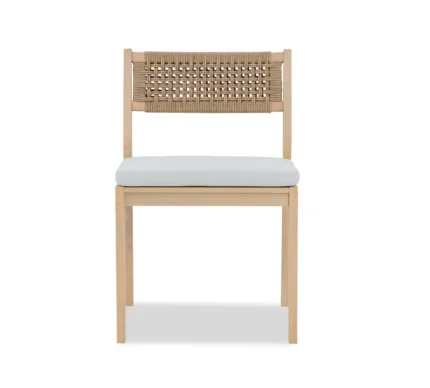
Solid Eucalyptus Wood Dining Chair with Cushions (Set of 2)
Original price was: $274.99. $197.99Current price is: $197.99.
-
Sale
 Outdoor
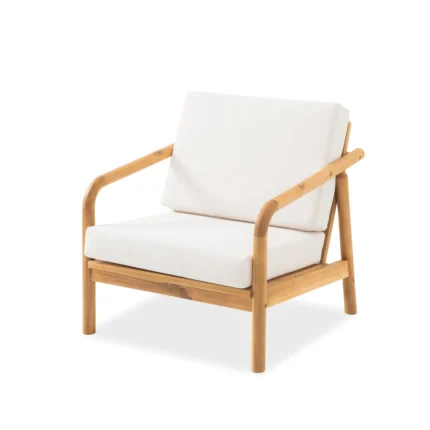
Patio Lounge Chair with Solid Wood Frame & Woven Rope Back
Original price was: $490.44. $348.44Current price is: $348.44.
-
Sale
 Outdoor
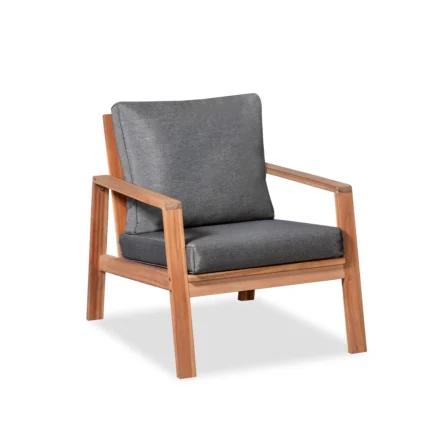
Solid Acacia Wood Outdoor Lounge Chair with Cushions (Set of 2)
Original price was: $425.11. $306.08Current price is: $306.08.
-
Sale
 Outdoor
Solid Acacia Wood Patio Dining Chair with Cushion (Set of 2)
Original price was: $461.25. $332.10Current price is: $332.10.
-
Sale
-
Sale
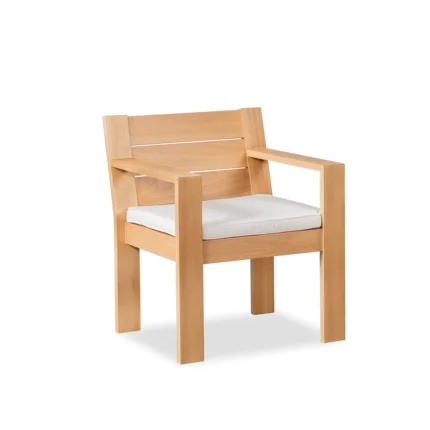 Outdoor
Solid Wood Patio Dining Chair With Seat Cushion
Original price was: $386.25. $278.10Current price is: $278.10.
-
Sale
-
Sale
 Chair
Acacia Wood Patio Chairs Set of 2 – Modern Outdoor Armchairs
CushionWithout CushionWith CushionPrice range: $100.72 through $114.30
-
Sale
 Outdoor
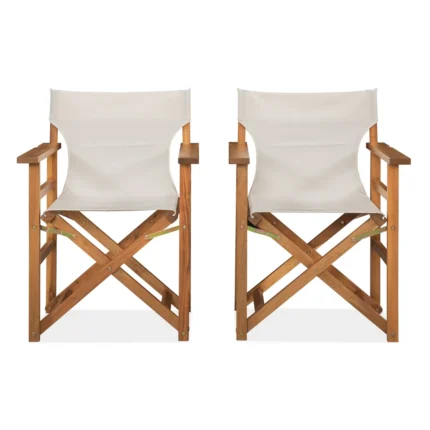
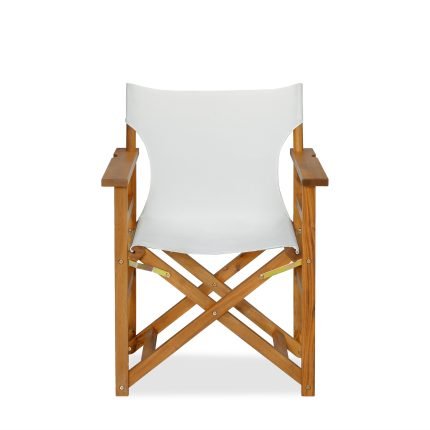
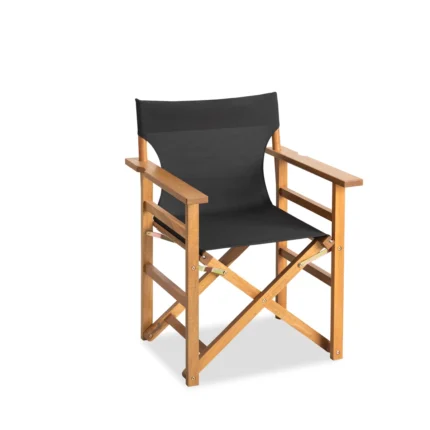
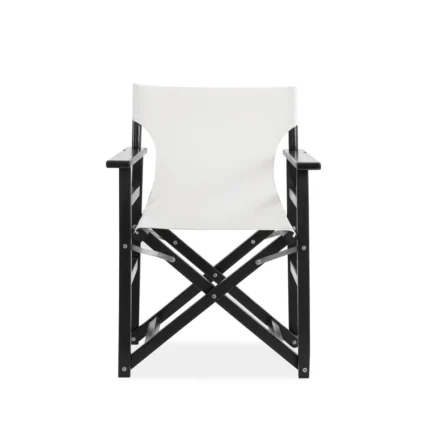
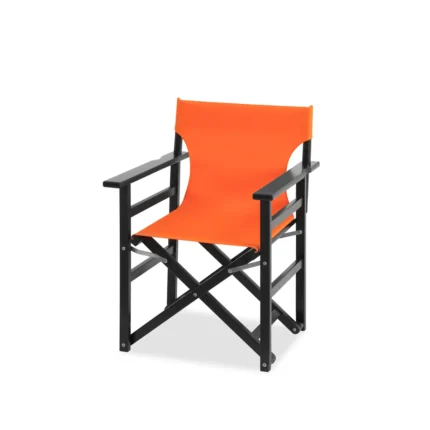
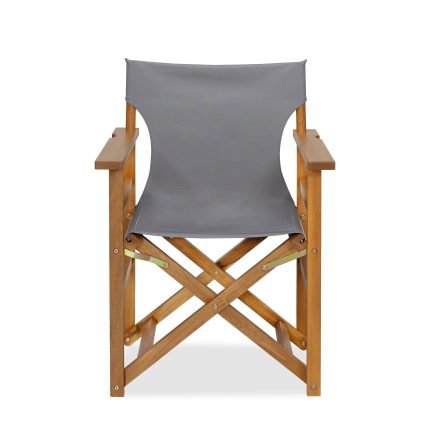
Acacia Wood Director Chair for Outdoor & Indoor Use
Frame / Seat ColorNatural Wood Frame / Gray SeatNatural Wood Frame / White SeatNatural Wood Frame / Black SeatBlack Frame / Cream SeatBlack Frame / Orange Seat$62.80$87.2228% OffSale
-
Sale
Compare outdoor garden chairs by the same seat, finish and care questions before choosing the rest of your acacia wood outdoor furniture.
Frequently Asked Questions
Is teak always the better outdoor chair?
No universal verdict follows from the species label. Compare the actual chair’s dimensions, construction, finish and maintenance requirements.
Can I use teak oil on an acacia chair?
Do not assume compatibility. Follow the existing finish and care-product instructions and test only as directed.
Does silver-grey wood mean the chair is damaged?
Colour alone does not establish structural condition. Inspect joints, legs and seat parts separately; stop using a chair with damage affecting stability.
Are cushions included with the Naro set?
Only with the with-cushion variation. The standard two-chair listing does not include a table.
Related outdoor seating guides
Use acacia vs teak outdoor chairs to compare complete, well-specified seats. Match their posture and dimensions first, then compare finish expectations, included items and care. That approach keeps the material decision connected to the way you will use the chair, and avoids paying for a wood label while overlooking a poor fit.