
This wood deck tiles buying guide helps you choose interlocking tiles with confidence: which thickness to look for, how slat count changes the look, what questions to ask about wood grade, and how to estimate coverage before you order. Get these four decisions right and the rest — pattern, finish and laying — becomes straightforward.
Deck tiles suit balconies, patios and flat roofs where full decking boards would be overkill. Because most systems click together without tools, buyers often focus only on colour and price. This guide shows why construction details deserve equal attention when you compare outdoor decking tiles side by side.
Wood Deck Tiles Buying Guide: The 5 Decisions
Work through these five checks in order and any wood deck tiles buying guide shortlist narrows itself quickly: surface compatibility, tile thickness, slat design and count, wood grade and sourcing, then set coverage. Each is explained below with what to look for and what to ask the seller.
1. Check Surface Compatibility First
Before comparing designs, confirm where the tiles will lie. Most interlocking outdoor decking tiles need a hard, flat, well-drained base such as concrete or existing paving. Uneven ground, soft soil or areas with standing water need preparation first — tiles laid over a poor base rock, gap unevenly and wear faster.
Also check drainage and edges: water must run off rather than pool beneath the tiles, and border areas may need cut pieces or edge trims. If your space is a balcony, verify load and waterproof-membrane rules with the building before ordering.
2. Tile Thickness and Base Rigidity
Tile thickness affects rigidity, step feel and tolerance for minor base unevenness. Thicker tiles with a sturdy interlocking base generally feel more solid underfoot and bridge small surface variations better than thin, flexible ones — but thickness alone says little without a well-designed connector system.
When learning how to choose deck tiles, compare the base as well as the wood: look at connector strength, whether the base allows water to pass through, and how the tile behaves at edges and corners. Ask the seller for the exact thickness and base specification of the product you are considering rather than assuming all tiles in one price band match.
3. Slat Count and Design: 6 vs 12 Slats
Slat count shapes both appearance and underfoot feel. Fewer, wider slats read bolder and more rustic; more, narrower slats — such as 12-slat designs versus 6-slat ones — read finer and more uniform. Neither layout is automatically better: the choice depends on the look you want and how the gaps handle dirt and drainage in your setting.
Look closely at slat spacing, edge finishing and fixing quality. Evenly spaced, smoothly finished slats with secure fixings signal careful manufacturing, while rough edges or loose slats warn of shortcuts. If possible, inspect a sample tile in daylight before committing to a full set.
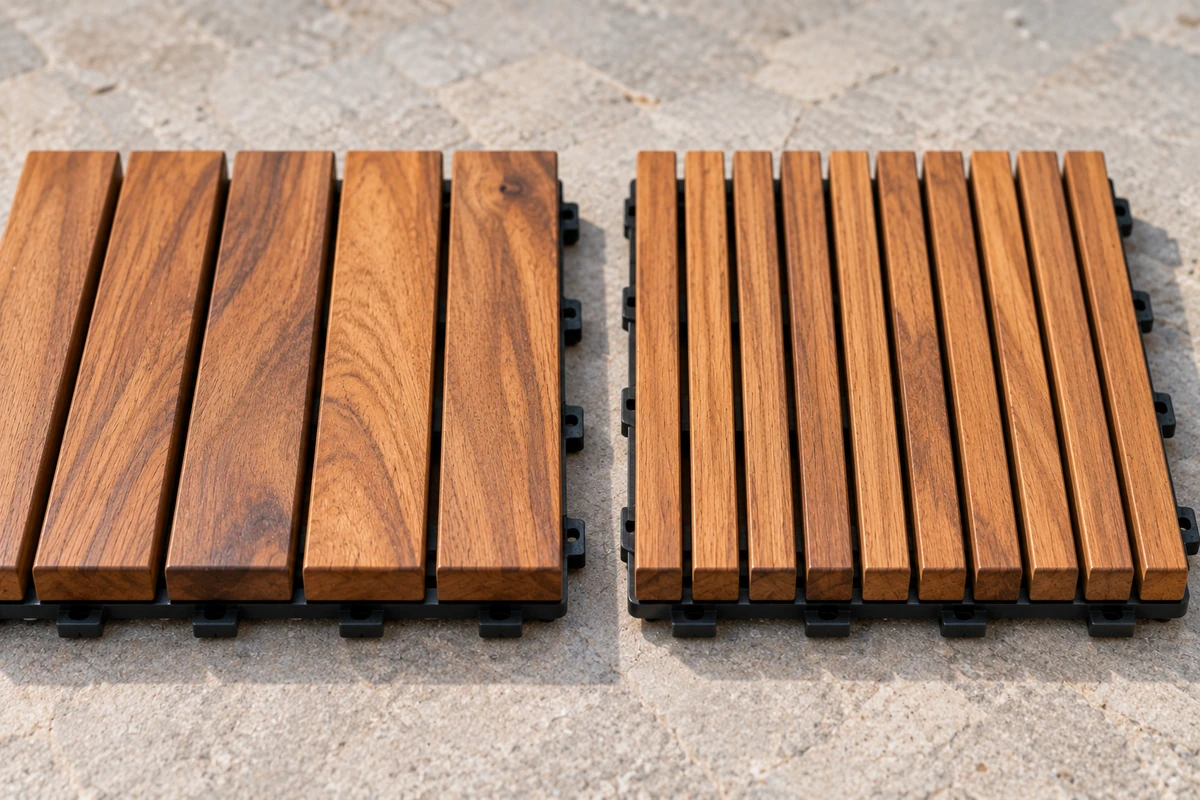
Compare slat count, spacing and edge finish on samples: 6-slat designs read bolder, 12-slat designs read finer.
4. Wood Grade and Sourcing Questions
Wood grade and sourcing matter more than marketing names. For any acacia tile you consider, ask which species is used, how the timber is graded for defects, and whether any chain-of-custody documentation covers that exact product. Clear answers beat vague claims about premium quality.
Finish matters too: check whether tiles arrive pre-finished, which maintenance products the manufacturer approves, and how the surface is expected to weather. A tile whose care routine you will actually follow outlasts a theoretically superior one you will not maintain.
5. Set Coverage: How Many Tiles to Order
Set coverage is simple arithmetic with a safety margin. Measure the area, divide by the coverage of one tile or set as stated in the product specification, then add extra for cuts, borders and future replacements. Running short mid-project is a common and expensive mistake, since later batches can differ slightly in tone.
Plan the laying pattern before ordering: straight grid, brick offset or bordered designs each change cutting waste. Sketch the area, mark drains and door thresholds, and confirm how edge pieces and trims are handled for your chosen pattern.
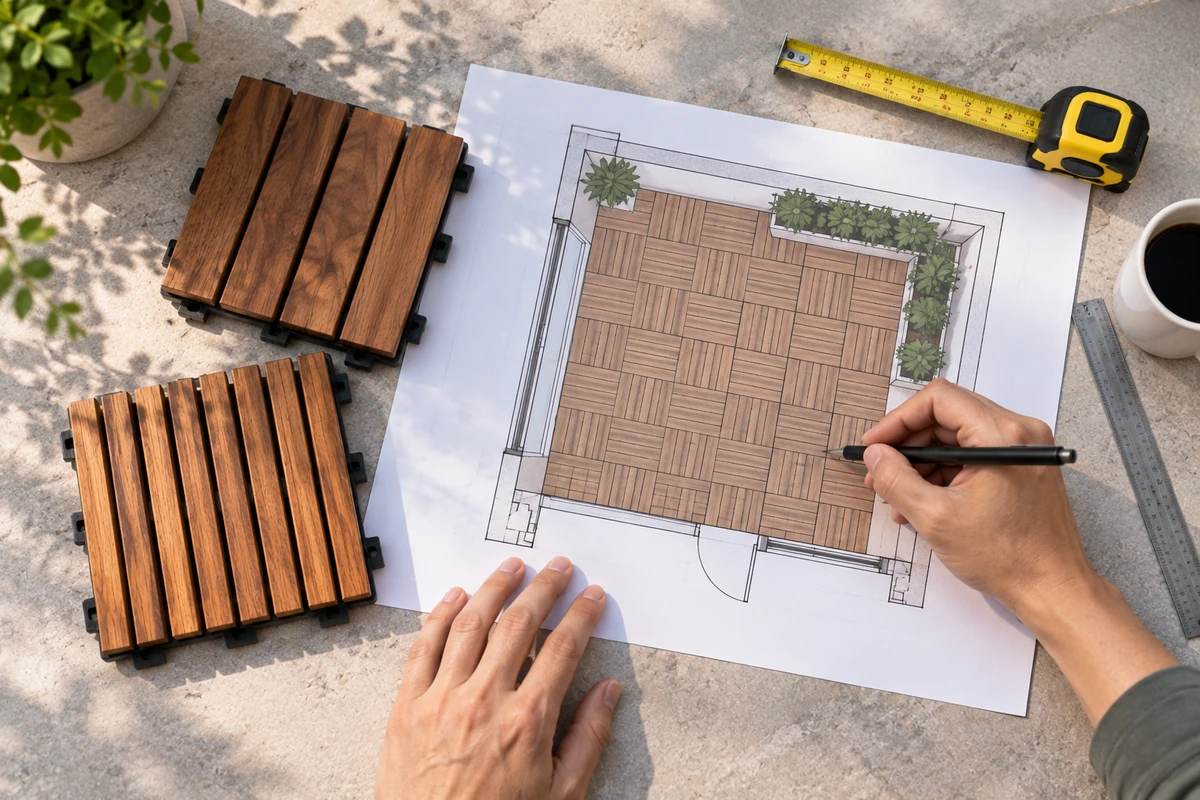
Measure first, then order with spares: sketch the pattern and account for cuts, borders and thresholds.
Recommended for you
-
Sale
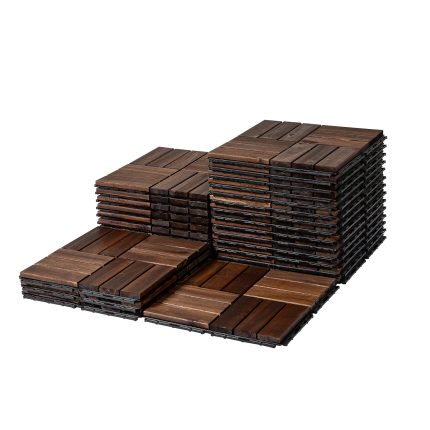 Decking Tiles 4.7
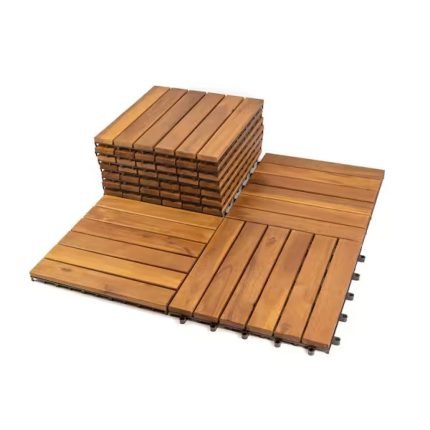
Round Joint Acacia Wood Deck Tiles, 12-Slat Interlocking Design for Indoor & Outdoor (Set of 27)
ColorPrice range: $77.05 through $79.93
-
Sale
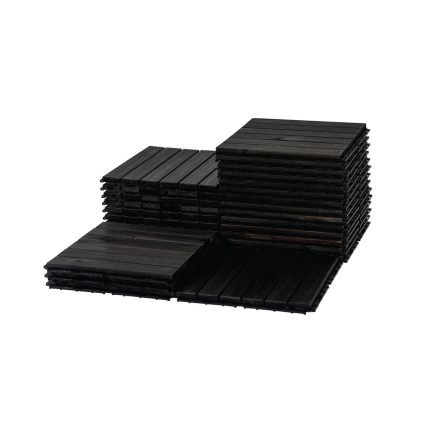
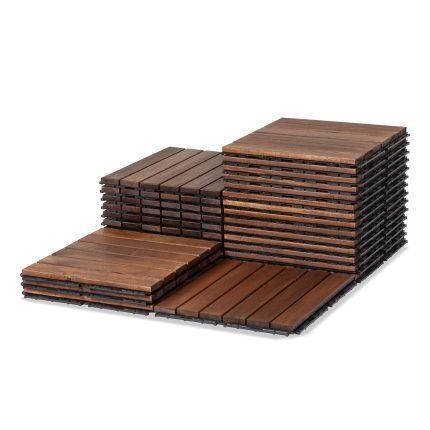
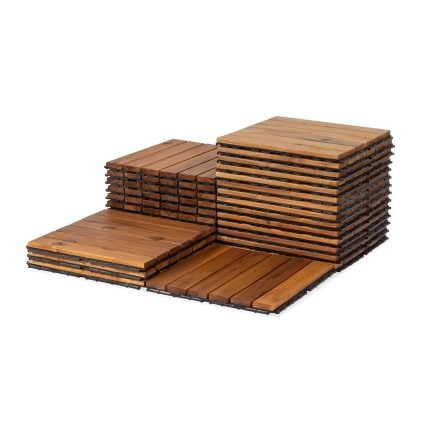 Decking Tiles 4.5
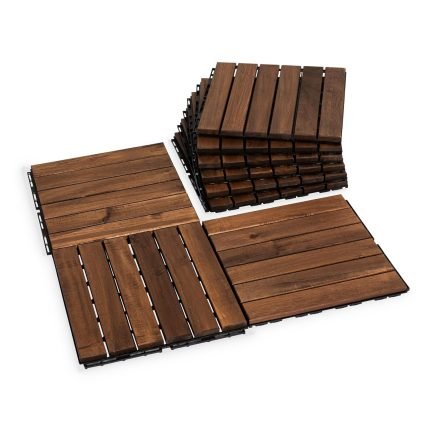
Round Joint Acacia Wood Deck Tiles, 6-Slat Interlocking Design for Indoor & Outdoor (Set of 27)
ColorOriginal price was: $104.02.$77.05Current price is: $77.05.
-
Sale
 Decking Tiles 4.6
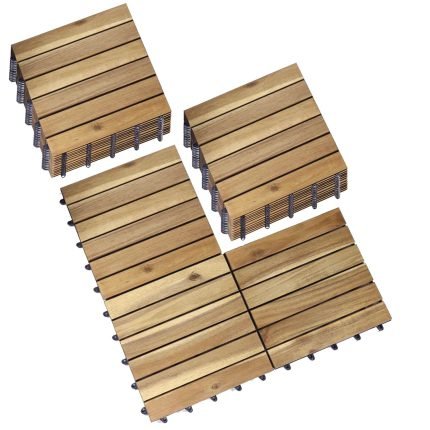
Square Joint Acacia Wood Deck Tiles, 6-Slat Interlocking Design for Indoor & Outdoor (Set of 27)
ColorOriginal price was: $104.02.$77.05Current price is: $77.05.
Frequently Asked Questions
How do I choose deck tiles for a balcony?
Confirm the balcony base is hard, flat and drained, check any building rules on load and membranes, then apply this wood deck tiles buying guide: thickness and base rigidity, slat design, wood grade and sourcing, and set coverage with spare tiles.
What tile thickness should I look for?
There is no single correct figure across all systems. Compare the exact thickness and base specification of each product, and favour rigid tiles with strong connectors and free drainage beneath.
Are 6-slat or 12-slat tiles better?
It depends on the look and feel you want. Six-slat designs read bolder while twelve-slat designs read finer; compare spacing, edge finish and fixing quality on a sample before deciding.
What should I ask about acacia grade?
Ask which species is used, how defects are graded, whether chain-of-custody documentation covers the exact product, and which finish and care routine the manufacturer approves.
How do I calculate set coverage?
Divide your measured area by the per-tile or per-set coverage in the product specification, then add extra for cuts, borders and spares. Sketch the laying pattern first so edge pieces are accounted for.
Verdict: Choosing Wood Deck Tiles Without Regret
A good wood deck tiles buying guide decision comes down to five verified facts about the exact product: a compatible hard base, honest thickness and connector quality, a slat design you have seen in daylight, documented wood grade and sourcing, and coverage with spares ordered upfront. Check those, and the tiles you lay this weekend still look right for seasons to come.