
Most living rooms are furnished, but not truly designed. There is a difference. A furnished room has a sofa, a coffee table and a rug. A designed room has a mood, a flow and a reason to linger. The best living room styling tips are not about buying more. They are about making more intentional decisions with what you already have.
These 8 principles are drawn from European interior design, where the focus has long been on comfort, quality and longevity over trend and display. You can apply them to any living room, regardless of size or budget.
Living Room Styling Tips Start with What You Own
The first of these living room styling tips is also the most underused: work with what you already have. European interiors are rarely built by buying entire room sets at once. They are assembled gradually, with each piece chosen carefully and kept for a long time.
Start with your existing sofa, table or armchair. Add linen cushions in neutral tones, mix textures like wool and boucle, and drape a throw casually across one arm. These small changes can shift how the room feels without replacing the main furniture. The goal is comfort with character, not showroom perfection.
Use a Rug to Define the Space
A rug that is too small is one of the most common mistakes in living room styling. When a rug floats in the middle of a room without connecting to the furniture around it, the space feels unanchored.
Choose a rug large enough for at least the front legs of your sofa and the living room table to sit on it. This creates a visual zone that holds the seating area together and makes the room feel more intentional. Natural fibers such as wool, jute and cotton add texture and warmth that synthetic rugs rarely match.
Design for Atmosphere, Not Only Appearance
One of the most useful living room styling tips is to change the question you ask when making decisions. Instead of asking, “What should this room look like?” ask, “How should this room feel?” The answer, whether calm, cozy, airy or grounded, becomes the guide for every choice that follows.
Color, material, lighting and furniture arrangement all contribute to atmosphere. When they align around a single feeling, the room becomes coherent. When they do not, the room looks busy even if every individual piece is attractive on its own.
Layer Lighting Instead of Relying on One Source
Lighting is one of the most overlooked living room styling tips, and also one of the most powerful. A single overhead light, especially a bright one, flattens a room and makes it feel more institutional than domestic.
European homes, particularly in Scandinavia and Northern Europe, often use layered, warm light out of necessity. The approach combines ambient light for overall illumination, task light for reading or working, and accent light to add warmth to corners and surfaces. Warm bulbs around 2700K create a noticeably softer atmosphere than cool white bulbs.
Create a Dedicated Corner for Rest
A personal retreat within the larger room is one of the most practical living room styling tips from European design. This is not about adding a separate room. It is about giving one corner a clear purpose.
A well-placed armchair, a floor lamp and a small side table are enough to create a spot that says, “this is where I slow down.” It does not need to be large. It needs to be intentional. In homes with limited square footage, this corner often becomes the most used and most valued part of the living room.
A dedicated relaxation corner is one of the most effective living room styling tips for everyday comfort.
More living room guides
Bring Natural Materials Into the Room
Biophilic design, the practice of connecting interior spaces to the natural world, has become central to European living room styling. Natural materials and organic forms help create calm in a way that synthetic alternatives rarely match.
In practice, this means choosing wood living room furniture over laminate, linen fabrics over polyester, and ceramic or stone accessories over plastic. A simple acacia wood living room piece, such as a side table, rack or stool, can add warmth without making the room feel cluttered.
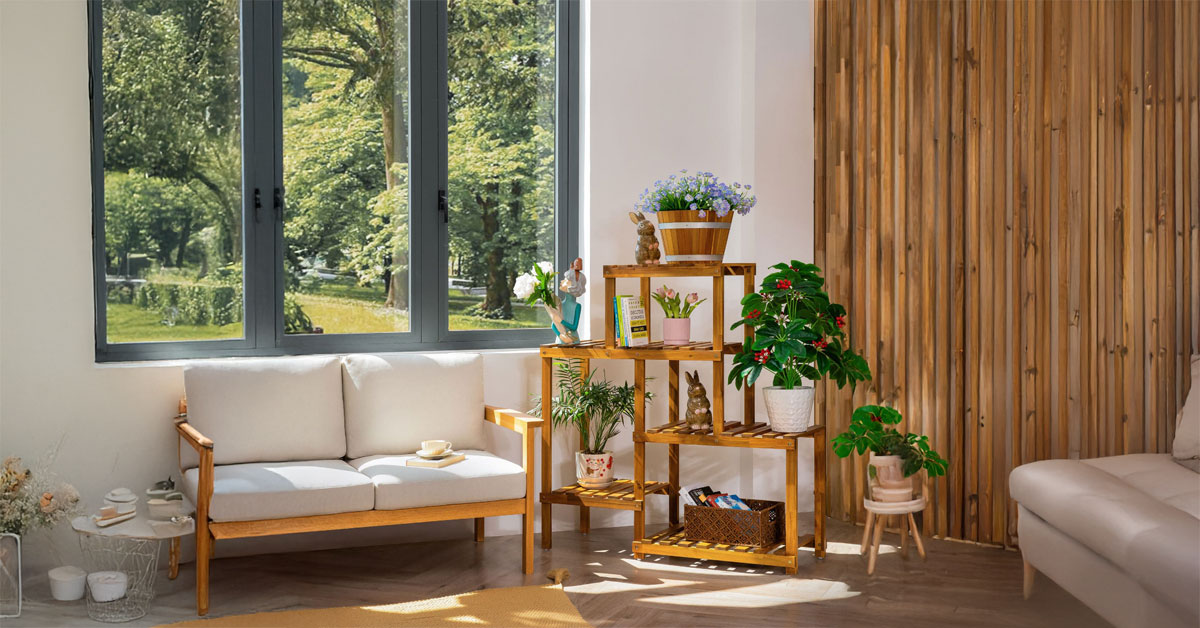
Natural materials and plants are essential elements in modern European living room styling.
Use Storage as Part of the Styling
Good styling is not only about what is visible. It is also about what has a place to go. Living room storage keeps the room calm by giving everyday objects a home: books, blankets, remotes, chargers and small accessories.
A living room rack can be both practical and decorative when styled with restraint. Mix useful items with a few personal objects, but leave enough empty space for the shelf to breathe. When storage becomes part of the design, the room feels easier to maintain.
Rearrange Before You Redecorate
Before spending money on new furniture or decor, try rearranging what you already have. Layout has a stronger effect on how a living room feels than many people realize. Some rooms feel wrong not because of the furniture, but because of where that furniture is placed.
Pull sofas and chairs away from the walls to create a more intimate conversation area. Identify the natural focal point of the room, such as a fireplace, window or television, and orient the seating toward it. Ensure enough clearance between pieces for comfortable movement.
Embrace Empty Space as Part of the Design
The final living room styling tip is counterintuitive: leave some space empty. European interiors, especially those influenced by Scandinavian and minimalist traditions, treat negative space as deliberate rather than unfinished.
An empty wall, a bare corner or an uncluttered surface gives the eye somewhere to rest. It also allows the pieces you choose to be seen properly. A room with fewer, better-chosen objects often feels more refined than a room filled with many items of similar quality.
Frequently Asked Questions
What are the most important living room styling tips?
The most important living room styling tips are to start with scale, define the seating area with a rug, layer lighting, use natural materials and leave some empty space so the room can breathe.
How can I style a living room without buying new furniture?
Rearrange the layout, improve lighting, restyle shelves, edit clutter and add texture with cushions or throws. These changes can make the room feel more intentional without a large purchase.
How do I make a living room feel warmer?
Use warm lighting, natural wood, soft textiles and a balanced color palette. A few wood pieces, plants and textured fabrics can make the room feel warmer without adding clutter.
Why does living room storage matter for styling?
Storage keeps everyday items controlled. When blankets, books and accessories have a clear place, the room looks calmer and the styling feels easier to maintain.
The Principle Behind All of These Tips
Good living room styling is not about following a single aesthetic or spending a specific amount of money. It is about making decisions with intention and understanding what each element contributes to the room.
When a room is built around how it feels to live in it, rather than how it looks in a photograph, it becomes genuinely comfortable. That is the standard the best living room styling tips have always pointed toward.